

Dimensional weight pricing is one of the most significant and controllable costs in fulfillment. Most operations absorb it as a fixed expense. It isn’t — and reducing it doesn’t require a capital investment.
What Dimensional Weight Actually Costs You
UPS, FedEx, and most regional carriers calculate billable weight as the greater of actual weight or dimensional weight. DIM weight is calculated by dividing cubic inches by a carrier divisor — currently 139 for most domestic ground shipments. A box that is two inches taller than the product inside it adds billable cubic inches that you pay for on every shipment.
At 1,000 shipments per day, a two-inch height excess adds roughly $1.50 to $3.00 per package in unnecessary DIM weight charges — between $1,500 and $3,000 in daily overspend. Annualized, that is $500,000 to $1,000,000 in avoidable carrier charges for a mid-size fulfillment operation.
Why Most Operations Don’t Solve It
The traditional answer to DIM weight is right-sizing automation — machines that measure each product and cut a custom box on demand. Equipment from major manufacturers runs $300,000 to $1.6 million per line, requires 6 to 12 months to implement, and adds maintenance overhead and operational complexity. For most 3PLs and fulfillment centers, the ROI calculation doesn’t justify the capital outlay, particularly for operations with variable client mixes or seasonal volume swings.
The result is that most operations keep shipping products in boxes that are two to four inches taller than necessary and pay the DIM weight penalty indefinitely.
Six Ways to Reduce Dimensional Weight Without Capital Equipment
Audit your current DIM weight overage
Pull 30 days of shipment data and calculate the ratio of actual weight to DIM weight by product category. Most operations find that 20 to 30 percent of their shipments account for 70 percent of their DIM weight overage. Identifying those SKUs is the starting point for any reduction strategy.
Right-size your box inventory
Most operations stock too few sizes. Adding two or three intermediate box dimensions between your most common sizes can eliminate the majority of void space without any other changes. The goal is that no shipment travels in a box more than two inches larger than the product in any dimension.
Target vertical space first
Height is the single most impactful dimension for DIM weight reduction. Products often fit well in length and width but travel with two to four inches of empty vertical space. Eliminating that space on every applicable shipment produces immediate, measurable savings.
Use adjustable-height corrugated boxes for variable SKU lines
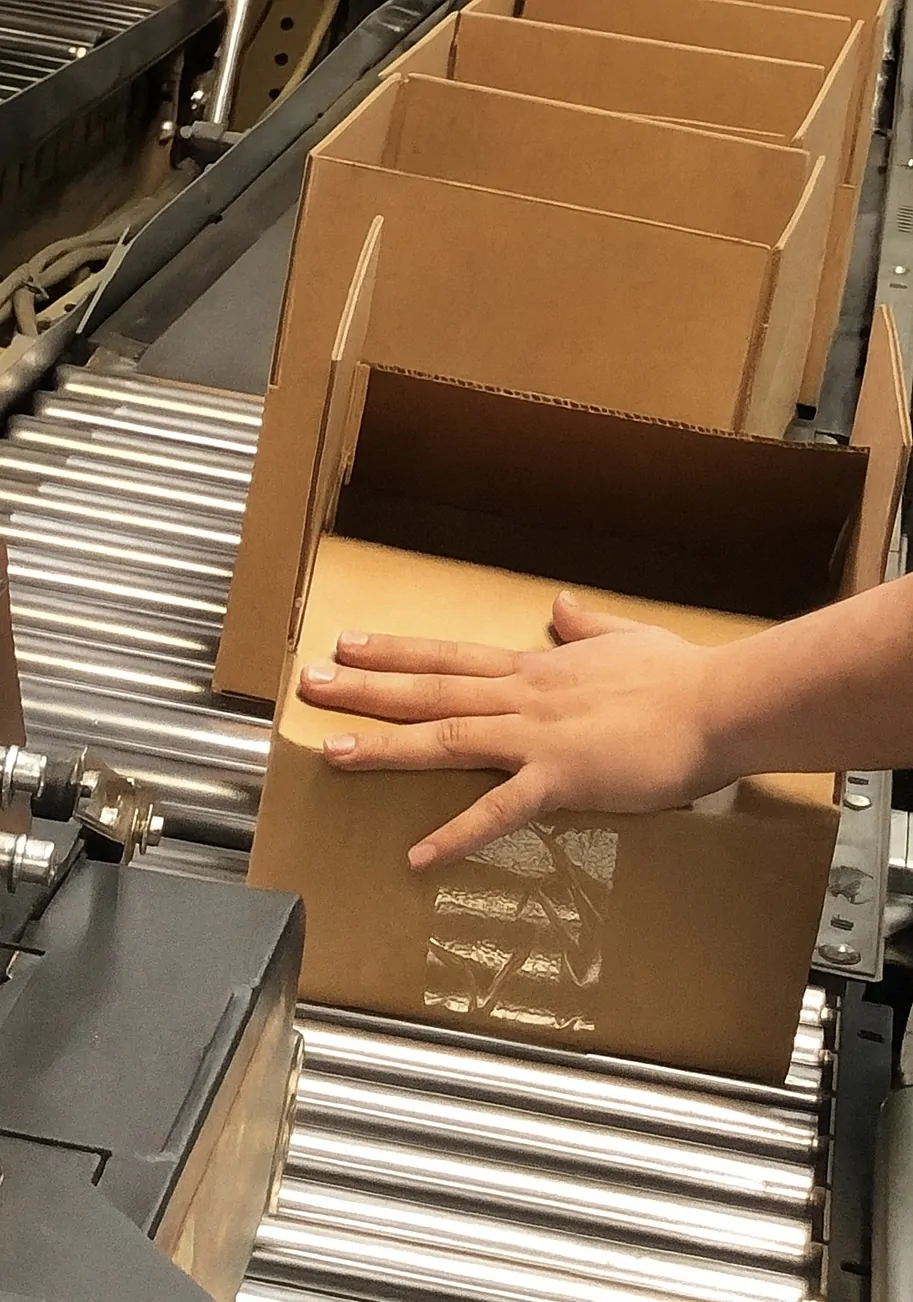
For fulfillment operations handling a wide range of product heights, maintaining enough box sizes to right-size every shipment creates inventory complexity. Adjustable-height corrugated boxes — like the patented MVP Box® — allow packers to fold down the box height to fit the product in one second with no tools or equipment. One box size handles a range of product heights, eliminating vertical void without automation.
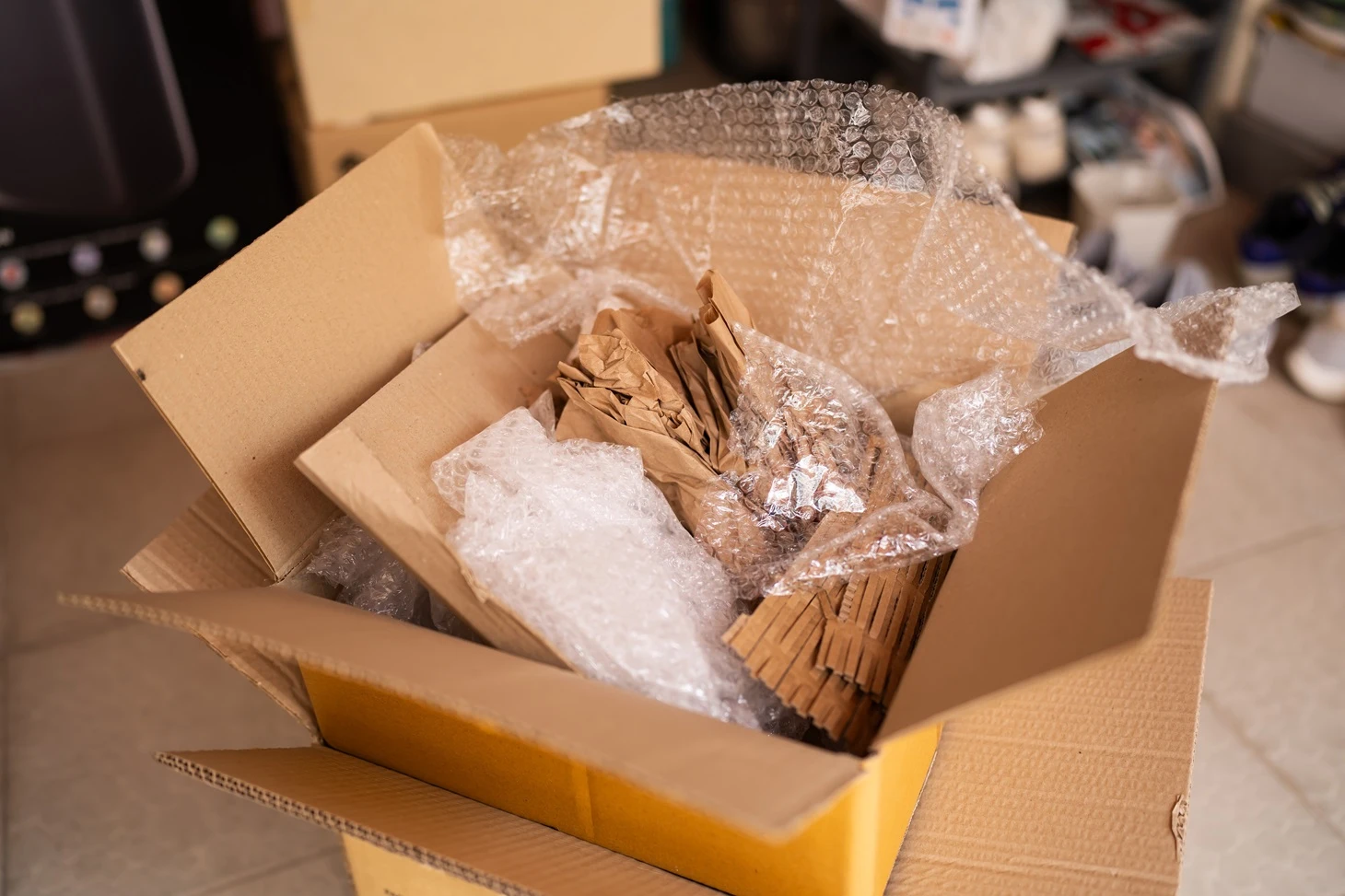
Reduce void fill dependency
Void fill exists primarily to compensate for oversized boxes. When box height is correctly matched to product height, void fill requirements drop significantly or disappear. Operations using MVP Box® report void fill reductions of up to 100 percent on applicable shipments.
Build box selection into pack station process
Packer behavior at the station level directly affects DIM weight spend. Packers who default to the nearest available box rather than the best-fitting box are adding cost with every shipment. Clear selection guidelines and periodic audits can reduce average DIM weight without any equipment change.
What Realistic Savings Look Like
Auditing and adjusting your box mix alone typically reduces average DIM weight by 10 to 20 percent. Adding adjustable-height boxes for variable SKU lines can push reductions to 30 to 50 percent on applicable shipments. For a fulfillment operation running 1,000 shipments per day, that range represents $150,000 to $500,000 in annual carrier charge reduction.
Next Steps
Start with the audit. Identify which product categories have the highest DIM-to-actual weight ratio and calculate what correctly sized boxes would save per shipment. The number is usually larger than expected.
For operations interested in adjustable-height corrugated boxes as a no-equipment right-sizing solution, Brandt Box supplies the patented MVP Box® nationwide. Contact us at 847-541-7000 or [email protected] to discuss sizing options and volume pricing for your operation.