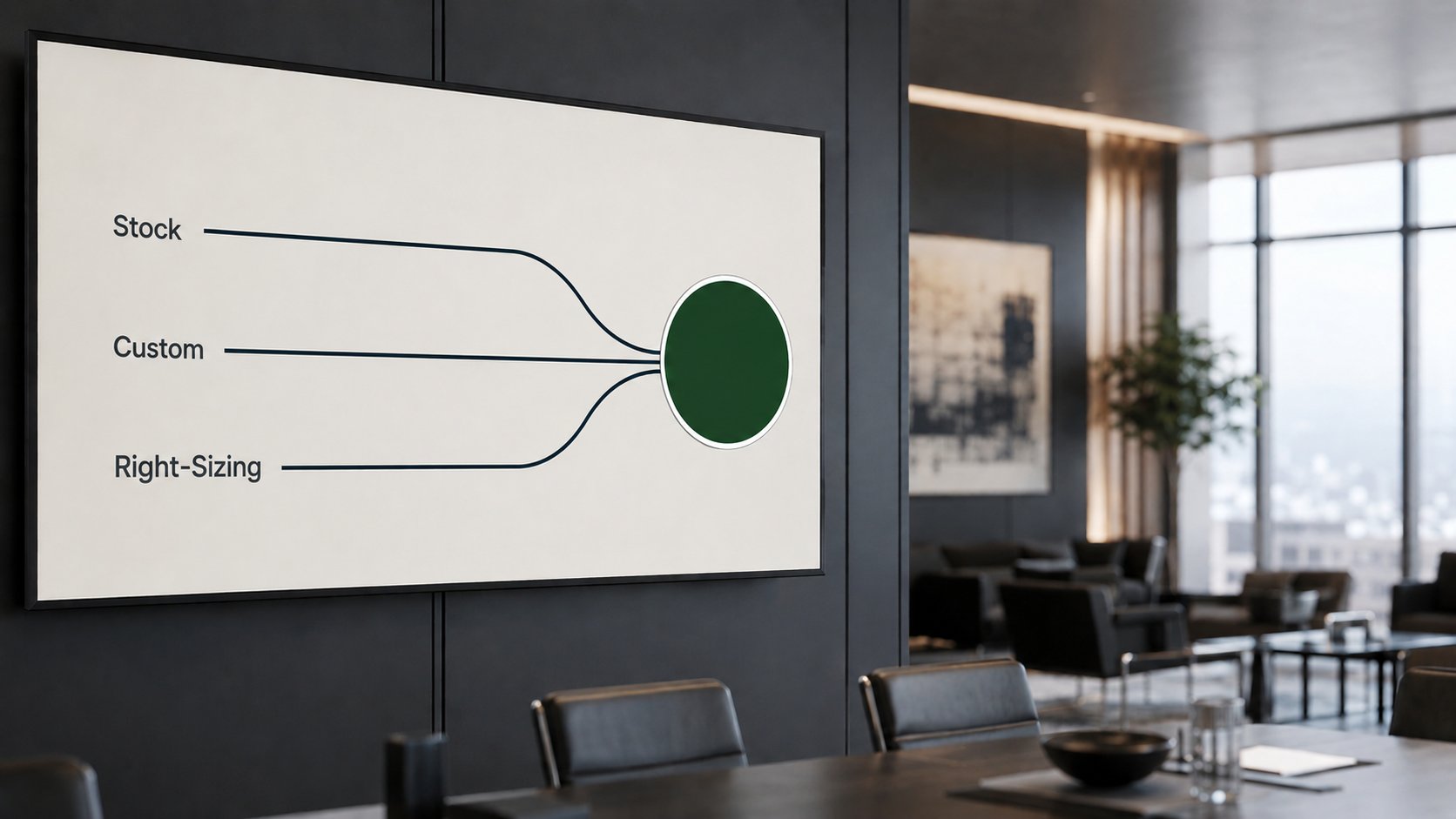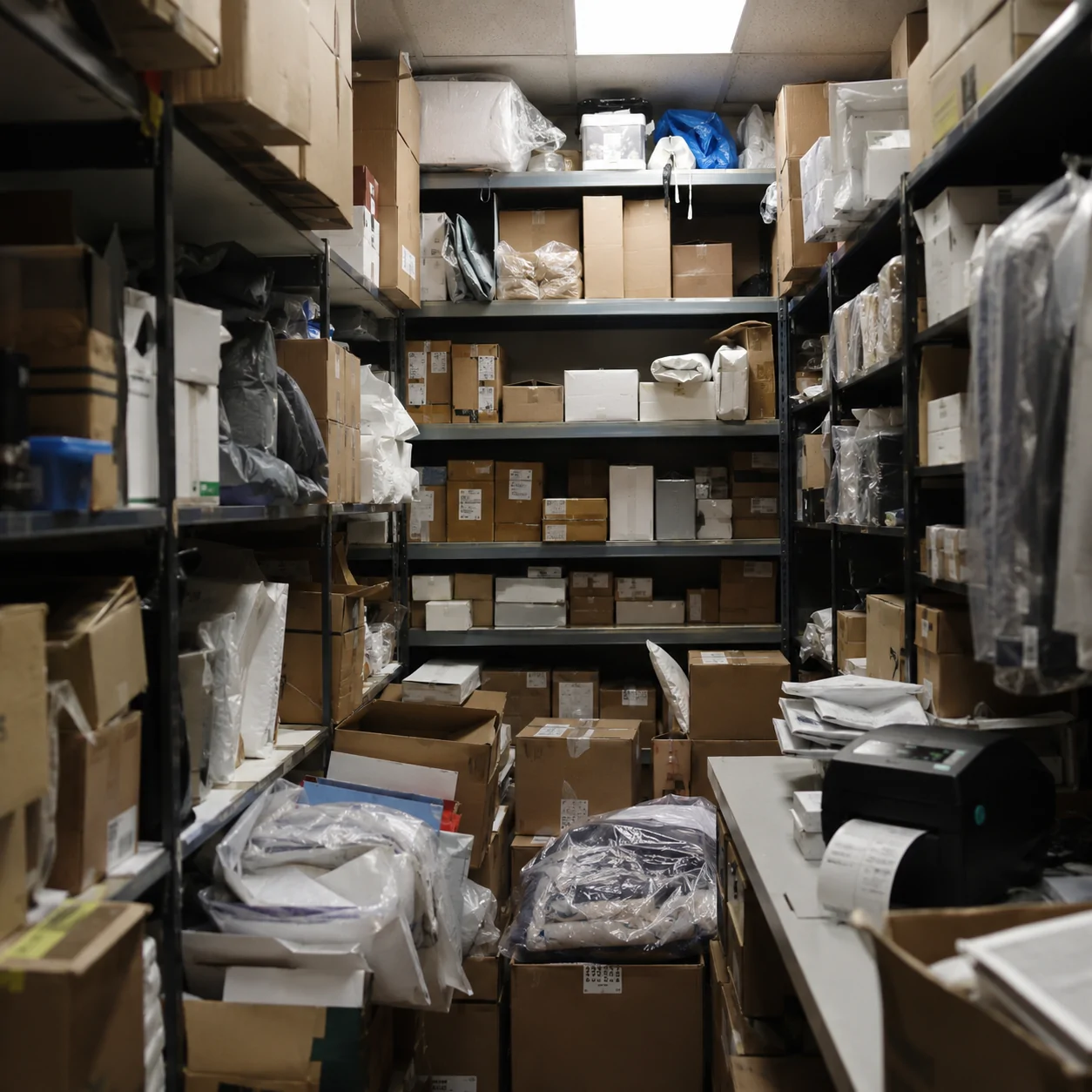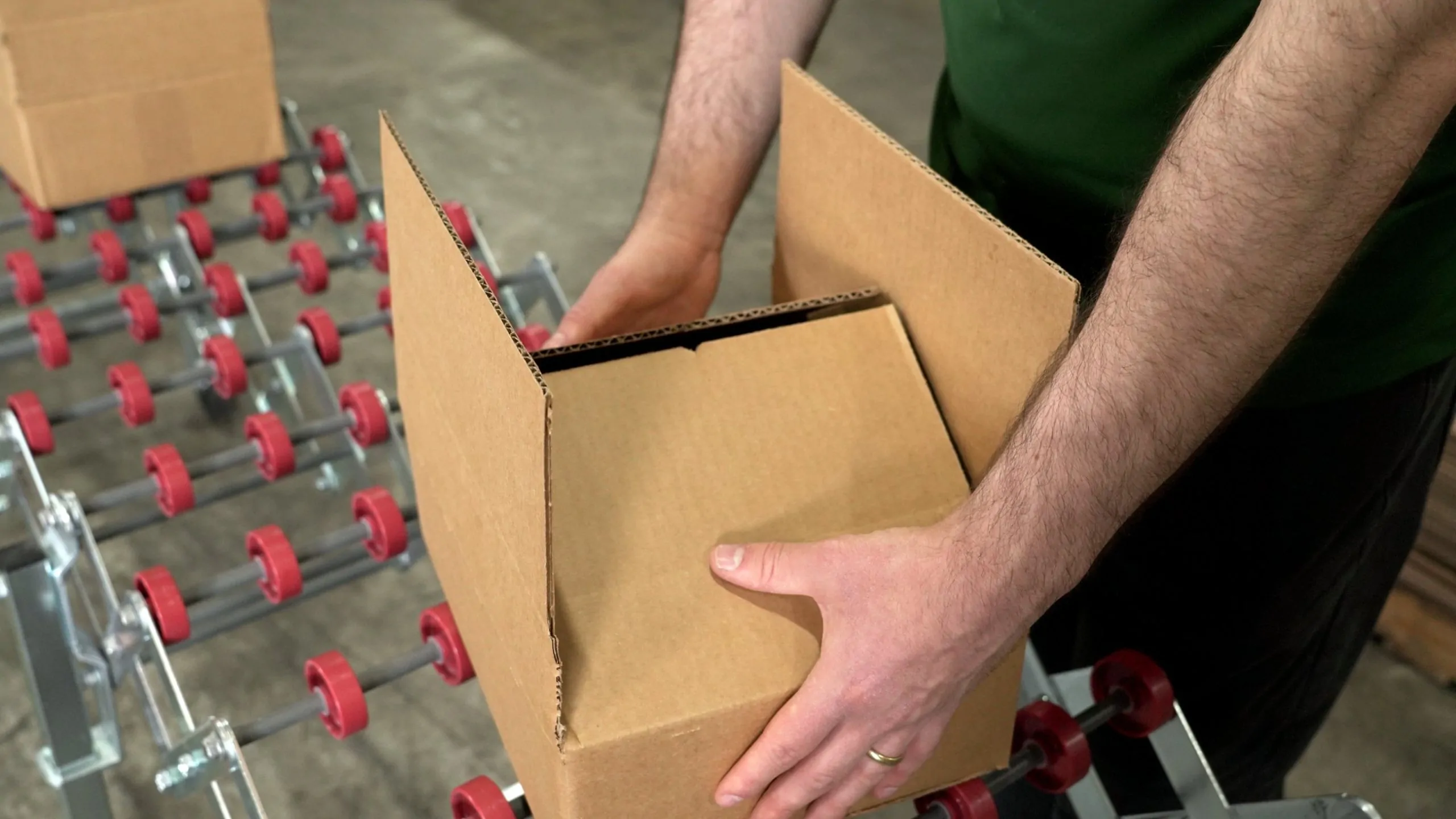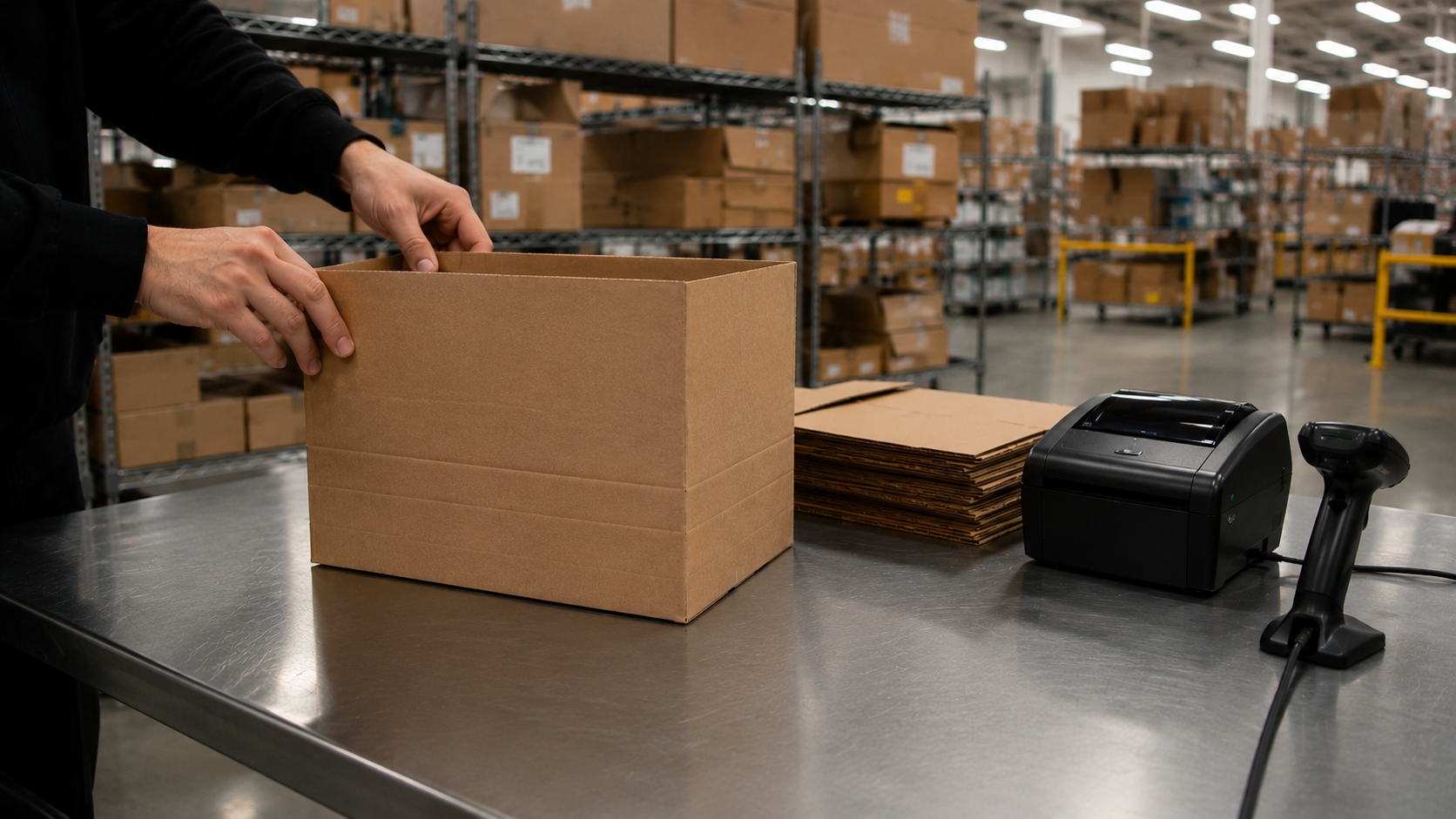


Dimensional weight (DIM weight) charges from UPS and FedEx have become one of the largest controllable costs in ecommerce fulfillment. With the carriers’ 2017 move to apply DIM pricing to all ground packages and the steady ratcheting down of DIM divisors since then, what was once a nominal fee for oversized boxes is now a structural cost on every shipment that’s larger than its actual contents require. For 3PLs and ecommerce brands shipping more than a few hundred packages per day, DIM overage adds up to six- and seven-figure annual costs that can be reduced through packaging strategy.
This guide covers eight methods for reducing DIM weight charges, with the operational implications and cost-benefit math for each.
What Is Dimensional Weight, and Why Does It Matter?
Dimensional weight is calculated by multiplying a package’s length × width × height (in inches) and dividing by a “DIM divisor.” For UPS and FedEx ground shipments in the US, the divisor is currently 139.
A 12″ × 12″ × 12″ box has a DIM weight of (12 × 12 × 12) ÷ 139 = 12.43 lbs.
If the actual package weighs 5 lbs, the carrier charges based on 12.43 lbs, not 5 lbs. The 7.43-lb gap is the “DIM overage” — empty space in the box that the buyer is paying to ship.
For a single shipment, the DIM overage charge might be $1-$3. For an operation shipping 5,000 packages per day with average DIM overage of 5 lbs, that’s roughly $5,000-$15,000 per day in overage. Annually, $1.8M-$5.5M.
This isn’t an exaggeration. It’s why DIM weight reduction has become a board-level operational concern for ecommerce-scale fulfillment.
Eight Methods to Reduce Dimensional Weight Charges
The methods below are ordered roughly by ease of implementation. The cheapest, fastest improvements come first; the operationally heavier solutions come later.
Method 1: Audit your current box utilization
The first step in any DIM reduction program is measuring the gap between actual product volume and shipped box volume. Most operations are surprised by how big this gap is.
How to audit: Pull 30-50 representative shipments from the last 30 days. For each, capture the box dimensions, the product dimensions, and the actual versus DIM weight. Calculate the average and worst-case gaps.
What you’ll typically find: 30-60% of shipments have measurable DIM overage. The worst offenders are usually small products (under 2 lbs) shipping in standard cartons sized for larger products, and irregularly-shaped products in oversized boxes used to accommodate void fill.
Cost to implement: Time only. 4-8 hours of analyst time.
Typical savings: Audit itself produces no savings, but reveals the size of the prize and prioritizes the methods below.
Method 2: Use multi-depth or score-line cartons
Multi-depth boxes have pre-scored fold lines that allow the operator to cut the box down to one of several heights at the pack station. A single SKU can ship products at multiple depths.
How it works: Operator measures product height, scores the box at the appropriate fold line, folds down, and seals. Box “right-sizes” itself to the product without machine equipment.
Cost to implement: Multi-depth boxes cost roughly 8-15% more per unit than equivalent standard cartons due to the extra scoring. No equipment investment required.
Typical savings: 15-30% reduction in DIM weight on shipments where it’s applied. Best for operations with consistent product types but variable heights.
Operational considerations: Requires operator training to consistently use the right fold line. Requires utility knife or scoring tool at each pack station.
Method 3: Rightsize your stock box catalog
Many operations stock 4-6 standard box sizes. Adding 2-3 more sizes — particularly small (8″ × 6″ × 4″ range) and medium-thin (12″ × 9″ × 3″ range) — captures volume that’s currently shipping in oversized cartons.
Cost to implement: No new equipment. Stocking additional sizes adds inventory carrying cost but typically pays back within 60-90 days through DIM reduction.
Typical savings: 10-20% reduction in DIM weight across the operation, depending on product mix.
Operational considerations: Requires updated WMS pick logic to select the right box per order. Adds complexity at pack stations.
Method 4: Use fit-to-product custom corrugated
For predictable, recurring product configurations — subscription box programs, kit shipments, branded ecommerce SKUs — custom-sized corrugated produced specifically for the product eliminates void fill and DIM overage entirely.
Cost to implement: Custom corrugated runs roughly 20-40% more per piece than equivalent stock boxes due to lower production volumes per SKU. Setup costs apply on flexographic print runs (plate charges).
Typical savings: 25-50% reduction in DIM weight on shipments using fit-to-product packaging. Highest on high-volume single-SKU shipments.
Operational considerations: Lead times of 2-3 weeks for production. Minimum order quantities (typically 250-500 pieces) require enough volume per SKU to justify. Best for SKUs shipping 500+ units per month.
Method 5: Reduce void fill volume
In operations using stock cartons, the void fill itself contributes to DIM overage when it forces operators to use larger boxes than necessary. Switching from large air pillows or kraft paper to smaller, denser fill (smaller air pillows, foam inserts, or thin cushion sheets) lets operators use smaller boxes without sacrificing protection.
Cost to implement: Variable. Higher-density void fill is typically 10-30% more expensive per unit than basic air pillows or kraft paper. Foam inserts are significantly more expensive but can replace both void fill and box size reduction in one move.
Typical savings: 5-15% DIM reduction across the operation. Larger savings for fragile-product shipments where current void fill is over-provisioned.
Operational considerations: Requires updated pack station setup. Some void fill changes affect customer perception of unboxing experience — worth testing on a subset of shipments before full rollout.
Method 6: Implement pre-scored fold-down boxes
Pre-scored fold-down shipping boxes allow a single SKU to ship products at multiple heights with no cutting and no trim scrap. Score lines are built into the side walls at manufacturing, and the operator folds the box down to the nearest scored height for each shipment.
Cost to implement: Pre-scored fold-down boxes cost roughly 15-25% more per piece than equivalent standard cartons. No equipment investment required.
Typical savings: 20-40% reduction in DIM weight on shipments using fold-down boxes. The reduction is driven by how closely the scored heights match your product mix.
Operational considerations: Requires brief operator training (typically under 5 minutes). Maintains the speed of stock box pack workflow. No cutting, no machine. One U.S. example is Brandt Box’s MVP Box®, which holds three U.S. patents on its pre-scored fold-down construction.
Method 7: Install a right-sizing machine
Right-sizing machines produce custom-sized boxes on demand at the pack station. Each box is built to fit the order it’s packing.
Cost to implement: Capital investment of $800,000 to $1,600,000 for a typical installation depending on throughput requirements. Installation typically takes 4-6 months including site prep, training, and integration with WMS systems. Ongoing supply contracts for the corrugated material that feeds the machine.
Typical savings: 30-50% DIM reduction across the operation. Highest of any method when the machine is fully utilized.
Operational considerations: Floor space requirement (typically 20-40 feet of pack line). Requires WMS integration to feed dimensions to the machine. Maintenance contract typically required. Best for operations shipping 5,000+ packages per day where the capital cost amortizes quickly across volume.
When it’s worth it: For operations above approximately $10M annual DIM overage, right-sizing machines pay back in 12-18 months. Below that volume, the capital cost is hard to justify.
Method 8: Negotiate carrier contract terms
DIM weight charges are partly negotiable. Volume shippers can secure DIM divisor improvements (going from 139 to 166 or higher), zone discounts, and minimum charge waivers as part of carrier contract negotiations.
Cost to implement: Time and negotiation effort. Some operations engage transportation consultants on a contingency basis.
Typical savings: 5-15% effective DIM reduction through divisor improvement, plus additional savings on zones and surcharges.
Operational considerations: Requires meaningful annual carrier spend (typically $1M+ minimum) to negotiate divisor improvements. Carrier contracts renew annually, so improvements compound across years.
Method Comparison: Cost vs. DIM Reduction
| Method | Capital cost | Per-unit cost premium | Typical DIM reduction |
|---|---|---|---|
| Audit current usage | None | None | Diagnostic only |
| Multi-depth cartons | None | +8-15% | 15-30% |
| Rightsize stock catalog | None | Inventory holding only | 10-20% |
| Fit-to-product custom | None (per SKU) | +20-40% | 25-50% |
| Reduce void fill volume | None | +10-30% on fill | 5-15% |
| Pre-scored fold-down boxes | None | +15-25% | 20-40% |
| Right-sizing machines | $800K-$1.6M | Material contract | 30-50% |
| Carrier negotiation | None | None | 5-15% |
For most operations, the highest-ROI sequence is:
- Audit first to size the prize
- Stock catalog rightsizing + void fill optimization for quick wins
- Pre-scored fold-down or multi-depth boxes for consistent operational improvement
- Custom corrugated for high-volume single-SKU programs
- Right-sizing machines if and only if shipment volume justifies the capital cost
- Carrier negotiation layered on top of everything else
Common DIM Reduction Questions
What’s the cheapest way to reduce DIM weight charges? The cheapest immediate fix is auditing current usage and rightsizing the stock box catalog. No capital investment, no per-unit premium, immediate operational improvement of 10-20%.
Is a right-sizing machine worth it? For high-volume operations (5,000+ packages per day, $10M+ annual carrier spend), yes — payback typically runs 12-18 months. For mid-volume operations, the $800K-$1.6M capital cost is hard to justify. Pre-scored fold-down boxes or fit-to-product custom corrugated achieve 60-80% of the DIM reduction at a fraction of the capital cost.
Can I just negotiate better DIM divisors with UPS or FedEx? Volume shippers can. Operations with annual carrier spend below $1M typically don’t have leverage. For larger shippers, working with a transportation consultant or RFP-ing the business between UPS and FedEx every 2-3 years produces meaningful divisor improvements.
What’s the difference between multi-depth and pre-scored fold-down boxes? Multi-depth boxes have pre-scored fold lines at fixed heights. The operator selects which line to fold at and cuts away the excess. Pre-scored fold-down boxes such as MVP Box also use scored heights, but the operator folds the box down to the nearest score with no cutting and no trim scrap. Fold-down is faster at the pack station and produces no waste, but costs slightly more per piece.
How much time do multi-depth or fold-down boxes add to the pack workflow? Properly trained operators add 2-4 seconds per package on multi-depth boxes (cutting and folding) and essentially zero seconds on pre-scored fold-down boxes (the fold-down motion replaces a flap closure that was happening anyway).
Will custom packaging really pay for itself through DIM savings? For SKUs shipping consistent product configurations at 500+ units per month, yes — the DIM savings on fit-to-product custom typically exceed the per-unit premium within the first month. For low-volume SKUs (under 100 units per month), custom packaging is harder to justify on DIM economics alone, though it may justify on brand experience.
Is there a way to estimate my DIM overage cost? A rough estimate: average daily packages × average DIM overage in pounds × $0.30 per pound × 250 working days per year. For an operation shipping 1,500 packages per day with average 4-pound DIM overage, that’s 1,500 × 4 × $0.30 × 250 = $450,000 annually. The actual number depends on zone mix, contract rates, and the specific products, but the rough estimate is usually within 20-30% of actual.
Building a DIM Reduction Program
For operations starting a structured DIM reduction effort, a 90-day workplan that produces measurable results:
Days 1-15: Baseline audit. Pull 90 days of shipping data. Calculate average DIM overage by product category, by box size, and by shipment zone. Identify the top 10 SKUs by DIM overage volume — these will be the highest-ROI targets.
Days 16-30: Quick wins. Add 2-3 stock box sizes to address the top DIM overage SKUs. Test high-density void fill on representative shipments. Implement multi-depth boxes for SKUs with variable heights.
Days 31-60: Tactical solutions. Order custom corrugated for the top 3-5 highest-volume SKUs where fit-to-product makes sense. Test pre-scored fold-down boxes on a pack line subset. Measure DIM reduction against baseline.
Days 61-90: Strategic solutions. Based on the baseline math, evaluate whether right-sizing machine investment is justified. Begin carrier contract renegotiation if eligible. Document the program savings to support ongoing investment.
A well-executed 90-day DIM reduction program produces measurable reductions in DIM weight charges, with the operational changes carrying no capital cost and equipment-based changes taking 12-18 months if a right-sizing machine is included.
Where Brandt Box Fits
For operations evaluating fit-to-product custom corrugated and pre-scored fold-down shipping boxes as part of their DIM reduction strategy, Brandt Box makes both. Our patented MVP Box pre-scored fold-down shipping box reduces DIM weight without capital investment in machinery. We also produce fit-to-product custom corrugated for high-volume SKU programs across ecommerce, 3PL, and CPG operations.
To request an analysis of your DIM reduction opportunity, send us a representative shipping manifest (typically 50-200 representative packages) and we’ll produce a written analysis of your current DIM overage cost and projected savings from packaging changes. Request a manifest analysis or call (847) 541-7000.
For more detail, see how MVP Box consolidates box SKUs. For broader custom packaging capabilities, see our Custom Packaging page.