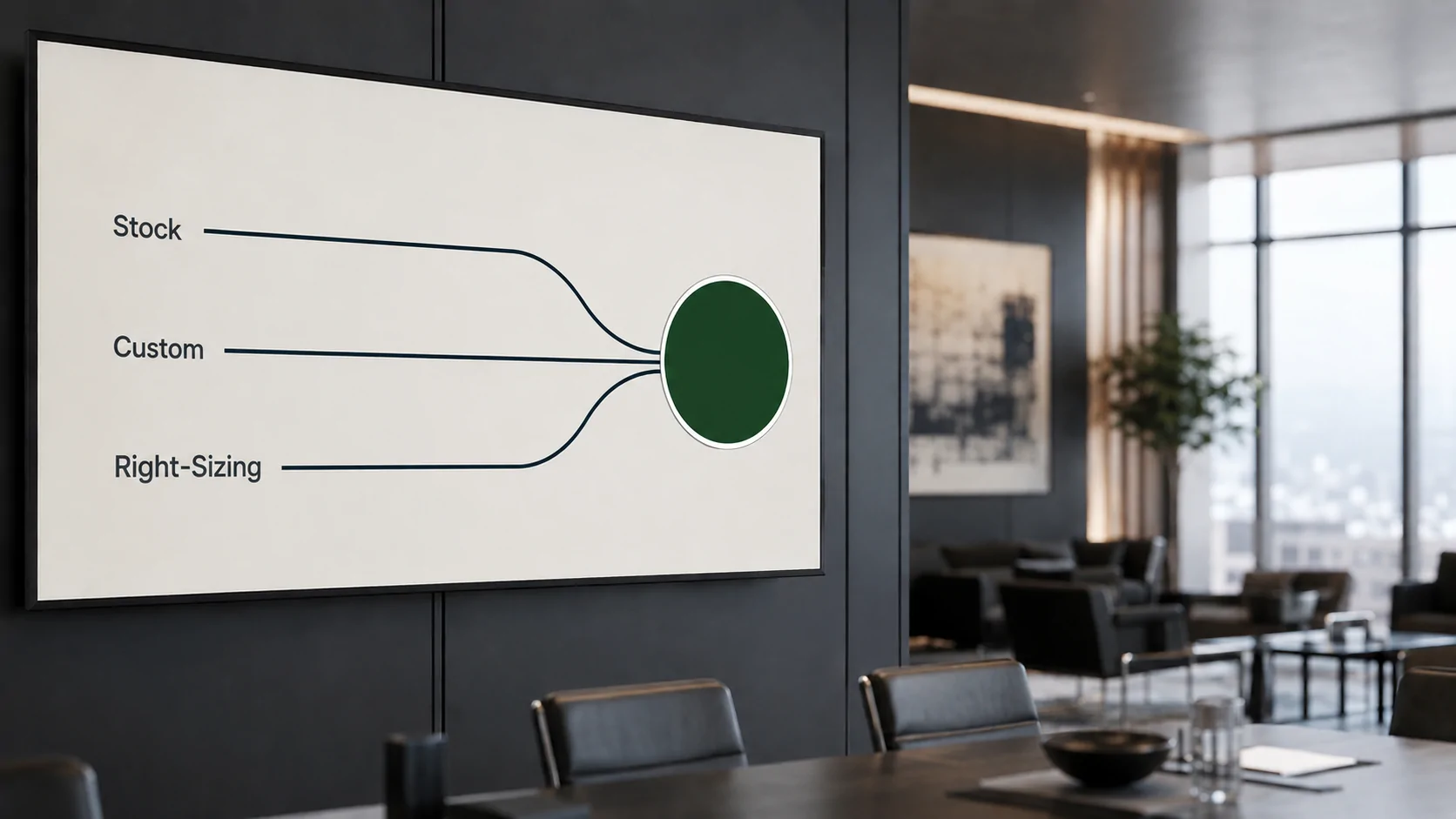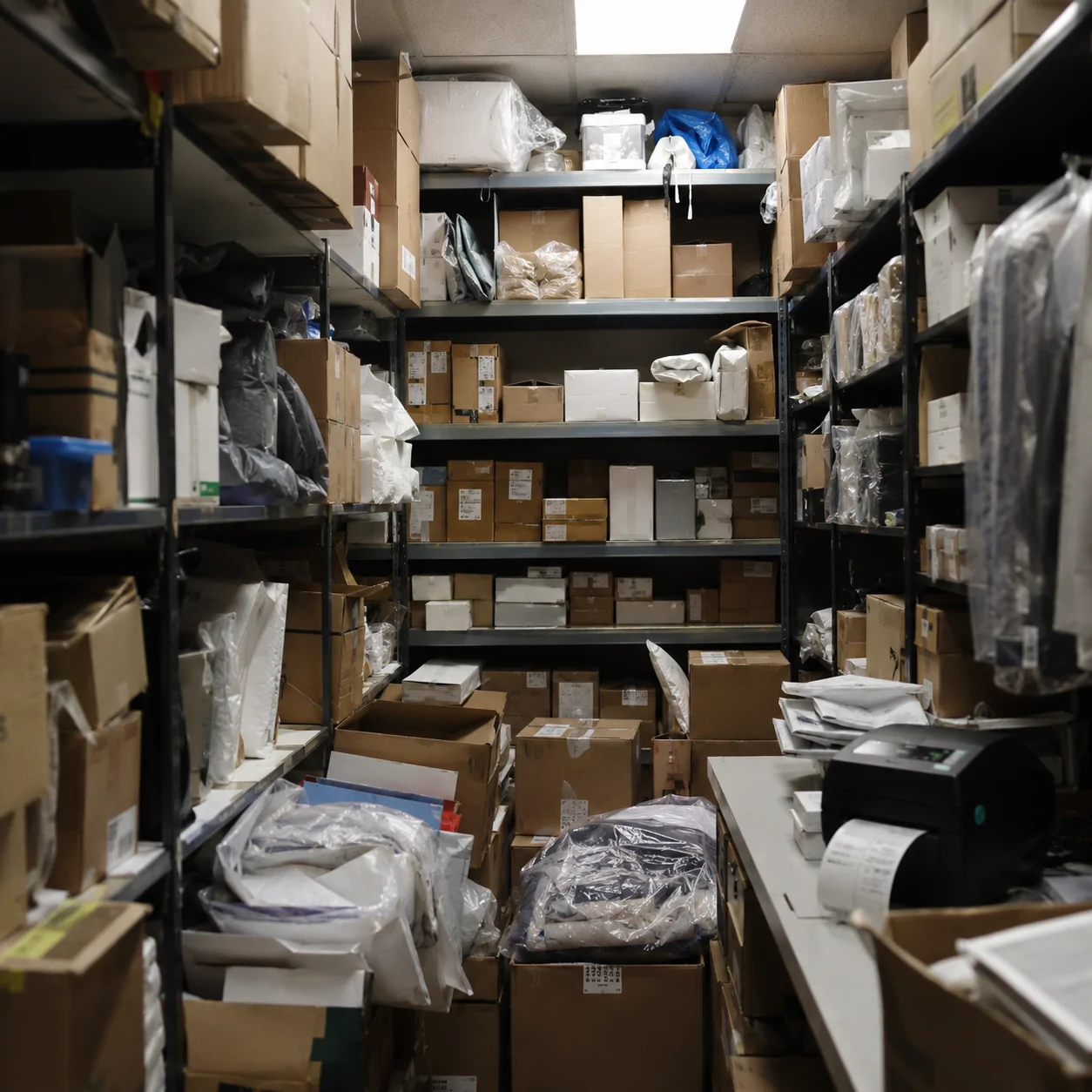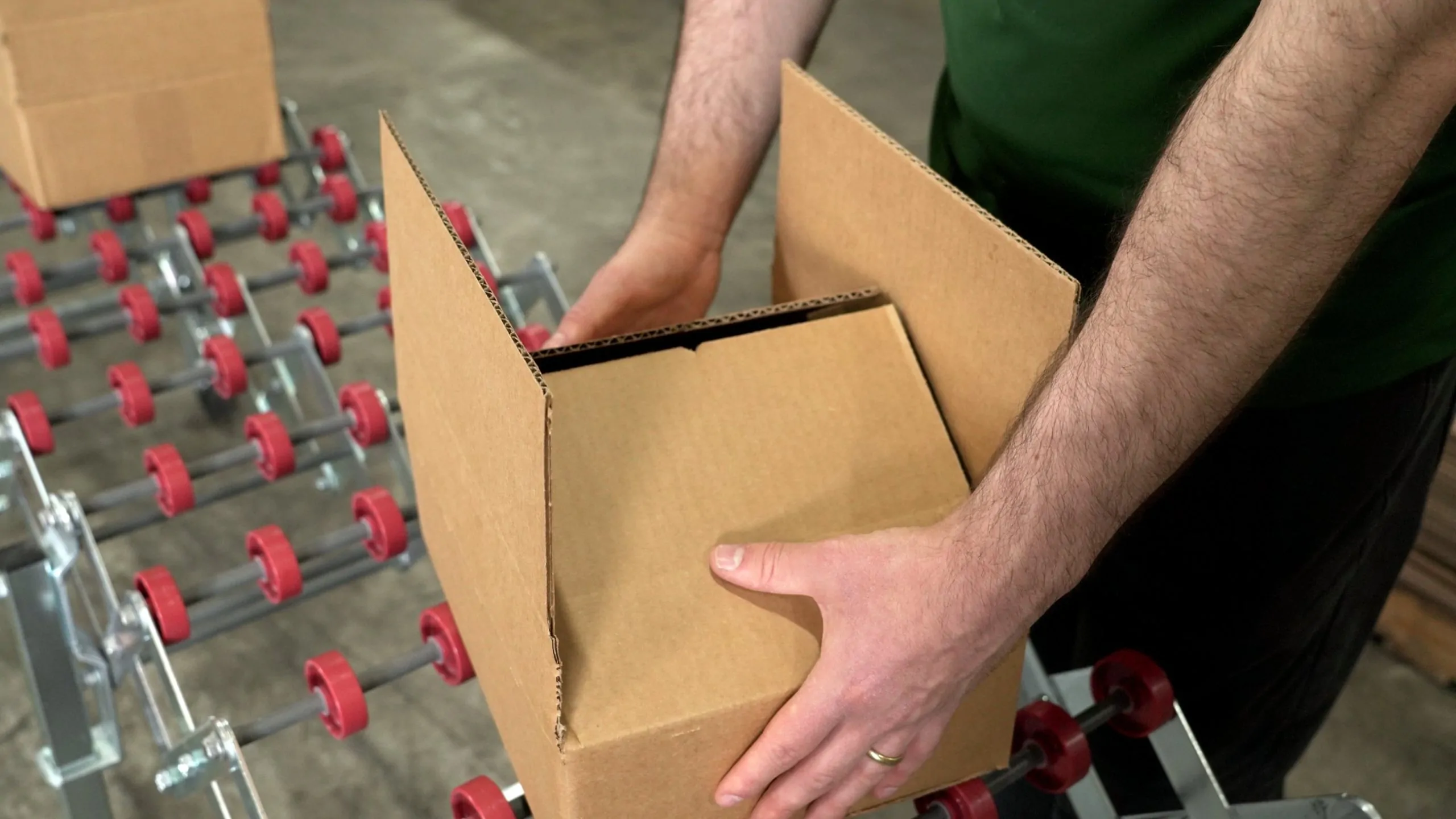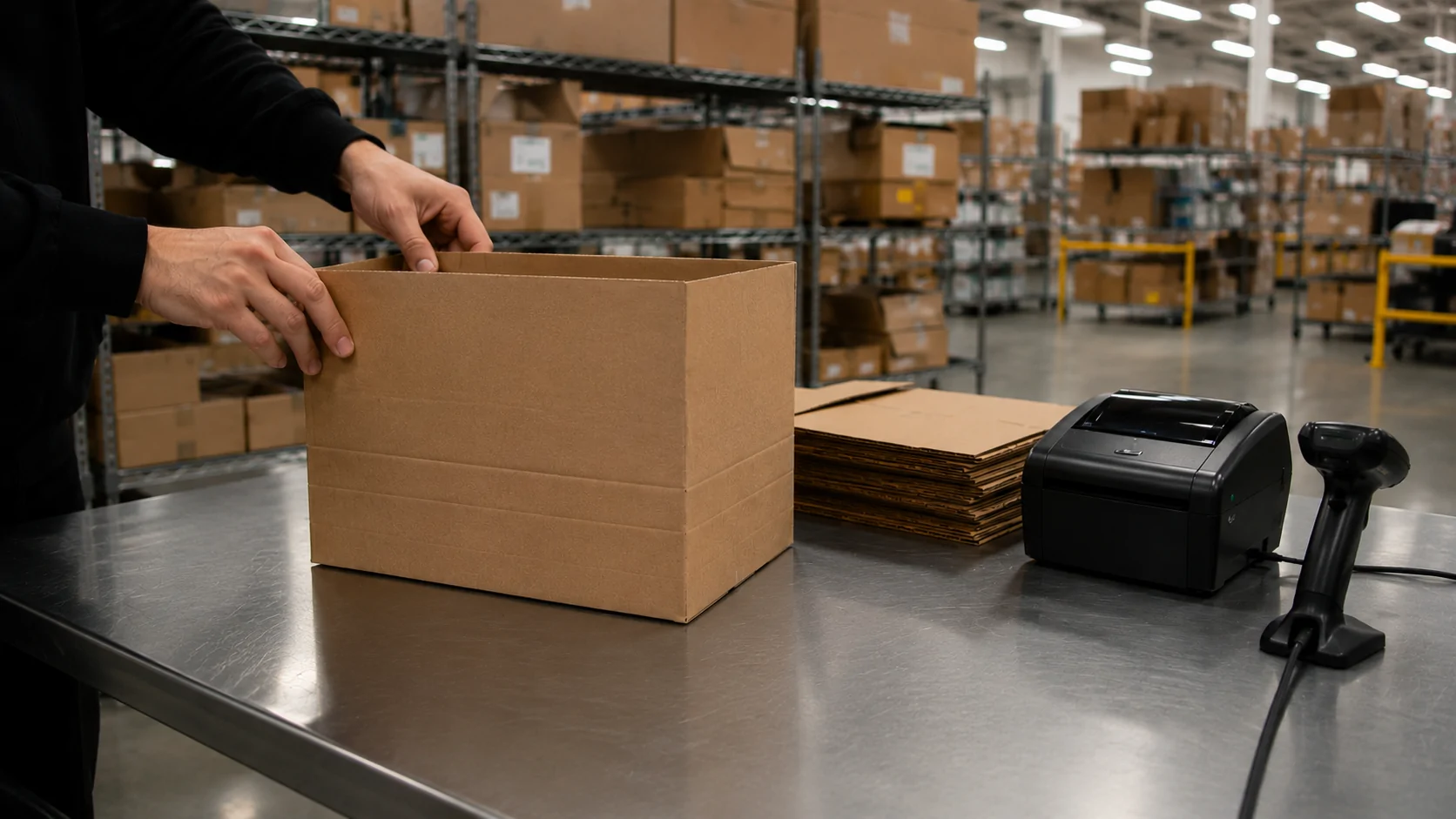


Selecting a custom packaging supplier is harder than most B2B vendor decisions for one structural reason: the market is fragmented across manufacturers, regional brokers, national catalog vendors, and offshore aggregators, each operating under a different cost structure and service model. The same RFQ sent to three “custom packaging companies” can return prices, lead times, and capability descriptions that look incompatible — because they are. This guide gives procurement and operations teams a 12-point framework for evaluating suppliers in apples-to-apples terms, identifying red flags early, and avoiding the most common procurement mistakes in custom packaging sourcing.
When to use this framework
This framework is built for buyers evaluating suppliers for ongoing custom packaging programs — not one-time orders. For a single short-run custom project, most of these questions are over-engineering. For any custom packaging spend that will recur quarterly or that will exceed $25,000 annually, working through these 12 points before signing a master agreement is the difference between a productive supplier relationship and a costly switching event 18 months later.
The 12-Point Evaluation Framework
1. Are they a manufacturer, a broker, or a reseller?
This is the single most important question because it determines the entire cost structure.
Manufacturers (converters) physically produce corrugated. They own the corrugator, the printing equipment, and the die-cutting machinery. They typically have higher minimums (500-1,000 pieces) and longer lead times (2-3 weeks) than catalog vendors, but their per-unit pricing is the lowest in the market.
Regional brokers maintain relationships with multiple manufacturers and resell with a markup of typically 15-30%. They often add real value through faster local delivery, smaller minimums (since they aggregate orders across customers), and one-stop sourcing for stock plus custom plus shipping supplies.
National catalog vendors stock pre-made boxes and broker custom orders to manufacturers. Their convenience comes at a 30-60% markup over manufacturer-direct pricing on custom work.
Online aggregators (custom packaging marketplaces) connect buyers to overseas or domestic manufacturer overflow capacity. Pricing can be aggressive but quality control, lead time reliability, and accountability vary dramatically.
How to ask: “Do you manufacture this in-house, or are you sourcing from a manufacturer? If sourcing, can you tell me which manufacturer?” Reputable suppliers in any of these categories will answer honestly. Evasion on this question is itself a red flag.
2. What are their actual minimum order quantities?
Suppliers vary wildly on this. Manufacturer minimums for custom printed corrugated typically run 250 pieces for digital and 500 pieces for flexographic. Catalog vendors often require 1,000-2,500 pieces. Some online aggregators advertise 50-100 piece minimums — those orders are usually subsidized by overseas manufacturers with quality and lead time tradeoffs.
How to ask: “What’s the actual minimum for [my specific configuration], and what does the per-unit price look like at the minimum versus 5x the minimum?” The price gap between minimum and 5x minimum tells you a lot about whether the supplier wants ongoing volume business or just transactional orders.
3. What’s their realistic lead time for a first order?
Suppliers will quote standard lead times. The real question is what happens to those lead times when:
- Your artwork has minor issues that need prepress correction
- Production hits a board availability constraint
- The supplier’s queue is full at the time of your order
- A QA issue requires a remake
Standard lead time is the floor. Real average lead time is what matters. Ask suppliers what their on-time delivery rate is and what their average lead time is across all orders, not just standard. Reputable suppliers track this. Suppliers who can’t answer or won’t share are flagging that they don’t measure.
How to ask: “What’s your standard lead time, and what’s your actual average lead time across all custom orders in the last 6 months? What’s your on-time delivery rate?”
4. Do they have in-house structural design?
Custom packaging often requires structural engineering — designing inserts, calculating crush resistance, sizing for dimensional weight optimization. Manufacturers with in-house structural designers can iterate on prototypes quickly and solve packaging engineering problems that brokers can’t.
If the supplier outsources structural design, you’ll see it in the lead time on first orders (longer, because the design happens off-site) and in the cost (because the broker is marking up the design work).
How to ask: “Who does the structural design on a custom dimensions project — your team or an outside designer? How many prototype iterations are included before production?”
5. What’s their print quality control process?
Print issues are the most common quality problem in custom corrugated. Color matching drift, registration issues on multi-color flexo, ink coverage variation — all happen on production runs and need active QC to catch.
Manufacturers with serious QC will color-match against approved Pantone or CMYK targets, do press proofs before production runs, and pull samples from the production run for quality verification. Suppliers without this process produce inconsistent print quality batch to batch.
How to ask: “Walk me through your color-matching process. Do you do press proofs? Do you pull production samples for QC?”
6. Are they running a paper supply contract that’s stable?
Corrugated pricing is heavily influenced by linerboard market prices. In tight markets (2021-2022 was an example), some manufacturers cut corners on board grade or paper weight to maintain margin while keeping per-unit pricing stable. The result: customers got “32 ECT” boxes that didn’t actually pass 32 ECT testing.
Reputable manufacturers maintain documented board grade specifications and can provide certification on request. They also typically have stable paper supply contracts that don’t force them into substitution games.
How to ask: “Can you provide ECT or burst test documentation for the board grade specified in our project? Who’s your linerboard supplier?”
7. What’s their financial stability?
This matters more than buyers typically realize. Custom packaging often involves prepayment of plate charges, tooling, and inventory. If the supplier goes out of business mid-program, plates and tooling can be tied up in bankruptcy proceedings and lost.
Family-owned manufacturers in business 30+ years generally have strong balance sheets and conservative growth. Newer suppliers (especially those backed by private equity in the last 5 years) can have leverage that creates risk during market downturns.
How to ask: “How long has the company been in business? Is it family-owned, employee-owned, or PE-backed? What’s the typical customer relationship length?”
8. Where are they shipping from?
Freight cost on custom packaging is meaningful — typically 8-15% of total order cost on full pallet shipments to most US destinations. A manufacturer 2,500 miles away with a 5% per-unit price advantage often loses to a manufacturer 800 miles away with comparable pricing once freight is included.
Manufacturers with multiple production facilities or warehouses can sometimes ship from the closest location, which beats the math. Single-facility manufacturers are easier to evaluate but may be at a freight disadvantage for distant buyers.
How to ask: “Where will my orders ship from? Do you have multiple facilities, or just one? What does freight typically run to [my zip code]?”
9. What’s their account management model?
Some suppliers assign a single account manager per customer. Others rotate inquiries through a customer service queue. The first model is faster on routine work and better for ongoing programs. The second is cheaper for the supplier and shows up in pricing.
For one-time orders, the customer service queue model is fine. For recurring programs, dedicated account management is worth the marginal cost difference.
How to ask: “Who would I work with on an ongoing basis? Is there a single point of contact for my account?”
10. Can they handle your full packaging program, or just one piece?
Brands often start with custom mailers, then later need shipping cartons, then later need branded packing tape, then later need interior packaging. A supplier that can grow with the program is meaningfully more useful than one that handles only one packaging category.
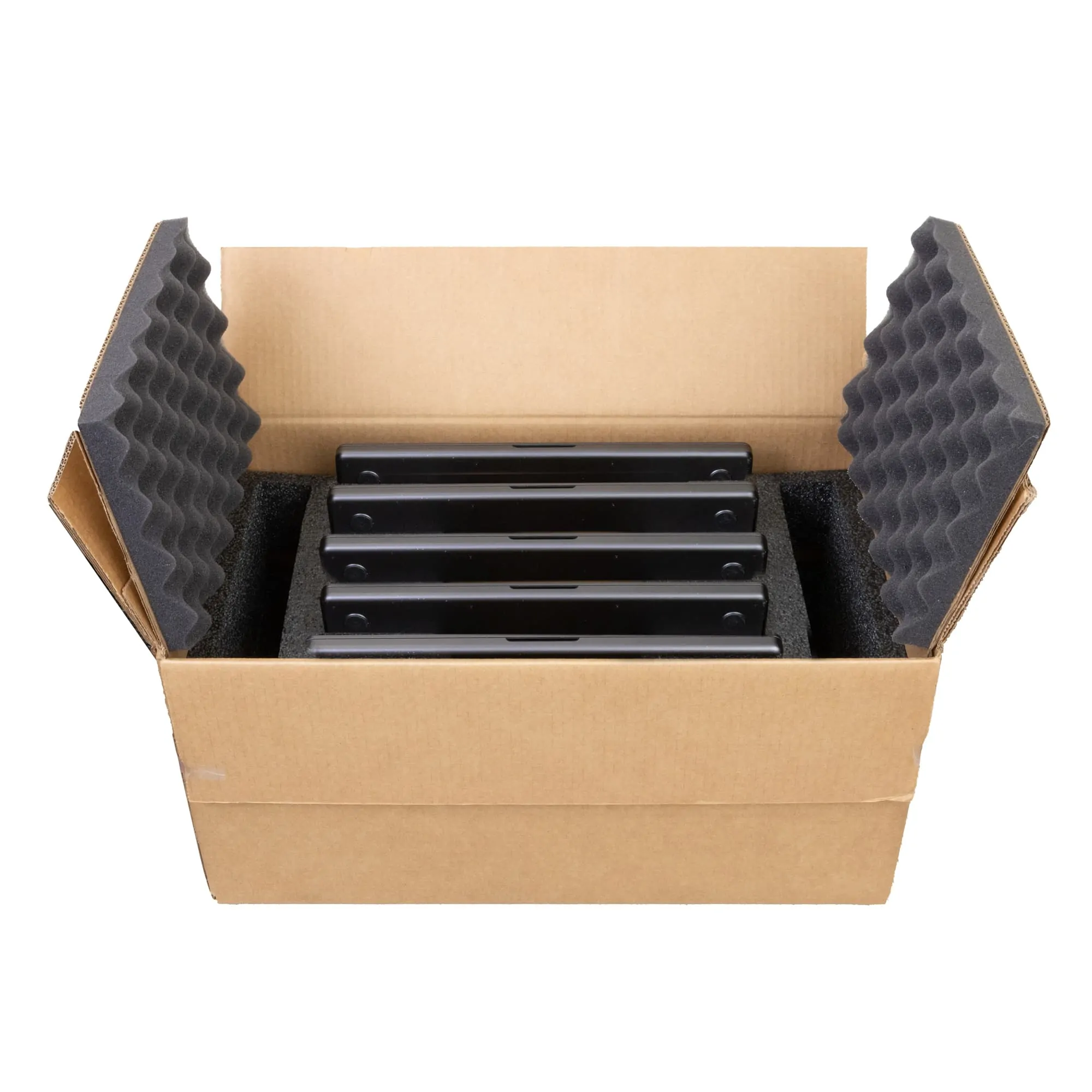
Manufacturers vary in scope. Some only do corrugated. Some add interior foam, custom inserts, plastic corrugated, branded tape, and stretch film. Sourcing the full program from one supplier reduces administrative overhead and often improves total program pricing through volume aggregation.
How to ask: “Beyond corrugated boxes, what packaging categories do you produce or supply? Could you handle our full packaging program over time?”
11. Do they have a track record with companies like yours?
Custom packaging is application-specific. A manufacturer that primarily serves industrial accounts may not have the print quality required for premium retail packaging. A supplier focused on small-batch DTC brands may not have the production capacity for a 50,000-piece quarterly retail program.
Ask for two or three customer references in your industry or size range. Reputable suppliers will provide them. Aspirational suppliers will dodge.
How to ask: “Can you give me two or three references from companies in [my industry / my approximate size]? I’d like to ask about quality, lead time reliability, and account management experience.”
12. What’s their approach if something goes wrong?
This is the most underweighted question in B2B procurement and the most important. Eventually something will go wrong on a custom packaging program — a print run that doesn’t match the proof, a shipment that arrives damaged, a lead time miss. How the supplier handles those situations determines whether the relationship survives.
Suppliers who bear the cost of remakes when QC fails (rather than passing it to the customer) are operating in good faith. Suppliers who debate whether the print issue is “really an issue” or who require lengthy claims processes are flagging their priorities.
How to ask: “Walk me through what happens if a production run arrives and doesn’t match the approved proof. Who pays for the remake? How fast can it be turned around?”
Red Flags That Should Cause You to Walk Away
In addition to weak answers on the 12 questions above, several specific signals indicate a supplier is unlikely to be a good fit:
Prices substantially below market. Custom corrugated has well-established market ranges. Quotes that come in 30-50% below the lowest reasonable manufacturer price are usually either bait pricing (the actual order will reveal hidden costs) or quality compromises that won’t show up until first delivery.
No physical address on the website. Reputable manufacturers publish their facility address. Suppliers that operate only through PO boxes or that obscure their location are typically brokers or aggregators who don’t want buyers contacting their actual manufacturers directly.
Payment required upfront via wire transfer or crypto. Standard B2B terms for established custom packaging suppliers are net-30 or 50% deposit / 50% on delivery. Suppliers requiring 100% upfront payment by non-traceable methods are operating outside normal B2B norms.
Inability to provide certifications. ECT testing, FSC certification (if claimed), food-grade certification (if relevant), are all standard documentation that legitimate manufacturers maintain. Suppliers who can’t provide them on request either don’t have them or aren’t operating at the quality level they’re claiming.
Communication only via WhatsApp or non-business email. Reputable suppliers operate from business email domains and have phone numbers staffed during US business hours. Communication through consumer messaging apps is often a sign of an offshore aggregator or an individual broker reselling without formal infrastructure.
Reluctance to send samples or prototypes. Manufacturers who are confident in their quality will send samples on request, sometimes for the cost of shipping only. Suppliers who push back on sample requests or who only show photos of past work are flagging a quality concern.
Common Procurement Mistakes in Custom Packaging Sourcing
Comparing quotes without standardizing specifications. Different suppliers will quote different board grades, different print methods, and different secondary specs unless the RFQ is locked down. A “$0.65 mailer” quote on 32 ECT B-flute is not comparable to a “$0.85 mailer” quote on 44 ECT C-flute. Specify everything.
Single-sourcing the first order with a new supplier. First orders carry the most risk because the supplier hasn’t yet demonstrated reliability. Running a parallel pilot with two suppliers on a moderate quantity, then awarding the larger ongoing program based on actual performance, costs slightly more upfront but reduces switching cost dramatically.
Optimizing only for price. Lead time variance, quality variance, and account management quality matter more than per-unit price for ongoing programs. A supplier with $0.85 per-unit pricing and 100% on-time delivery is usually a better economic choice than a supplier with $0.78 per-unit pricing and 80% on-time delivery, because production stockouts cost more than the per-unit savings.
Not testing samples in the actual shipping environment. Custom packaging that performs well in a warehouse drop test can fail in actual UPS or FedEx ground shipping because of vibration, stacking, and humidity exposure not replicated in lab tests. Testing 50-100 sample units through actual carrier networks before committing to a 10,000-piece order catches issues that lab testing misses.
Underestimating lead time on first orders. Quote-to-delivery on a first custom packaging order typically runs 6-10 weeks: 1-2 weeks for quote and approval, 1 week for prepress and proofing, 2-3 weeks for production, 1-2 weeks for shipping. Building this into project timelines from the beginning prevents scrambling at the end.
A Simple Procurement Workflow for Custom Packaging Sourcing
For brands and operations teams without deep packaging procurement experience, a workable workflow:
- Lock down specifications before going to quote. Inside dimensions, board grade, print method, color count, quantity, timing, shipping destination. Document them in a spec sheet.
- Identify 3-5 suppliers spanning the supplier categories: at least one manufacturer-direct, one regional broker, one national catalog vendor.
- Send identical RFQ to all of them. Don’t tip your hand on which type of supplier you prefer.
- Evaluate quotes against the 12-point framework above, not just on price.
- Request samples or prototype runs from the top 1-2 candidates before committing to a full production order.
- Award a pilot quantity (typically 1,000-2,500 pieces) to the leading candidate, with the option to expand to ongoing volume based on performance.
- Measure actual performance on the pilot — quality, lead time, account management — and use the data to negotiate the ongoing program.
This approach takes longer than just picking the lowest quote, but it produces meaningfully better long-term supplier relationships and lower total cost over multi-year programs.
Where Brandt Box Fits
Brandt Box is a third-generation family-owned corrugated manufacturer that has been supplying custom packaging since 1952. We work with ecommerce brands, 3PLs, food and beverage manufacturers, and CPG companies across the United States. For procurement teams running structured supplier evaluations, we typically score well on long-term stability, in-house structural design, lower minimum order quantities than national catalog vendors, and relationship-driven account management.
If you’re evaluating custom packaging suppliers and want to include Brandt Box in your RFQ, request a custom quote with your specifications, or call (847) 541-7000 to talk to our team.
For more detail on our custom packaging capabilities, see our Custom Packaging page.