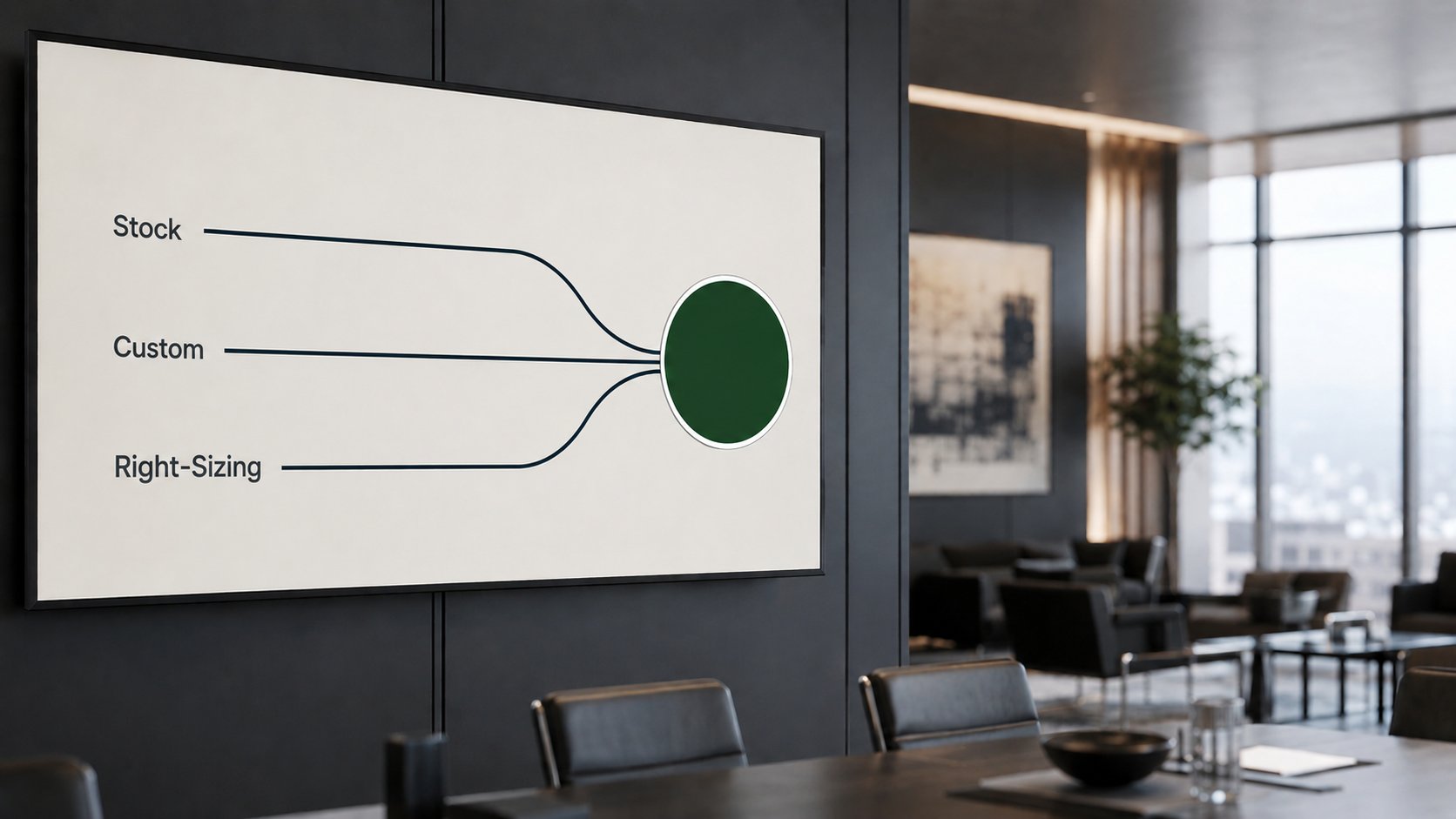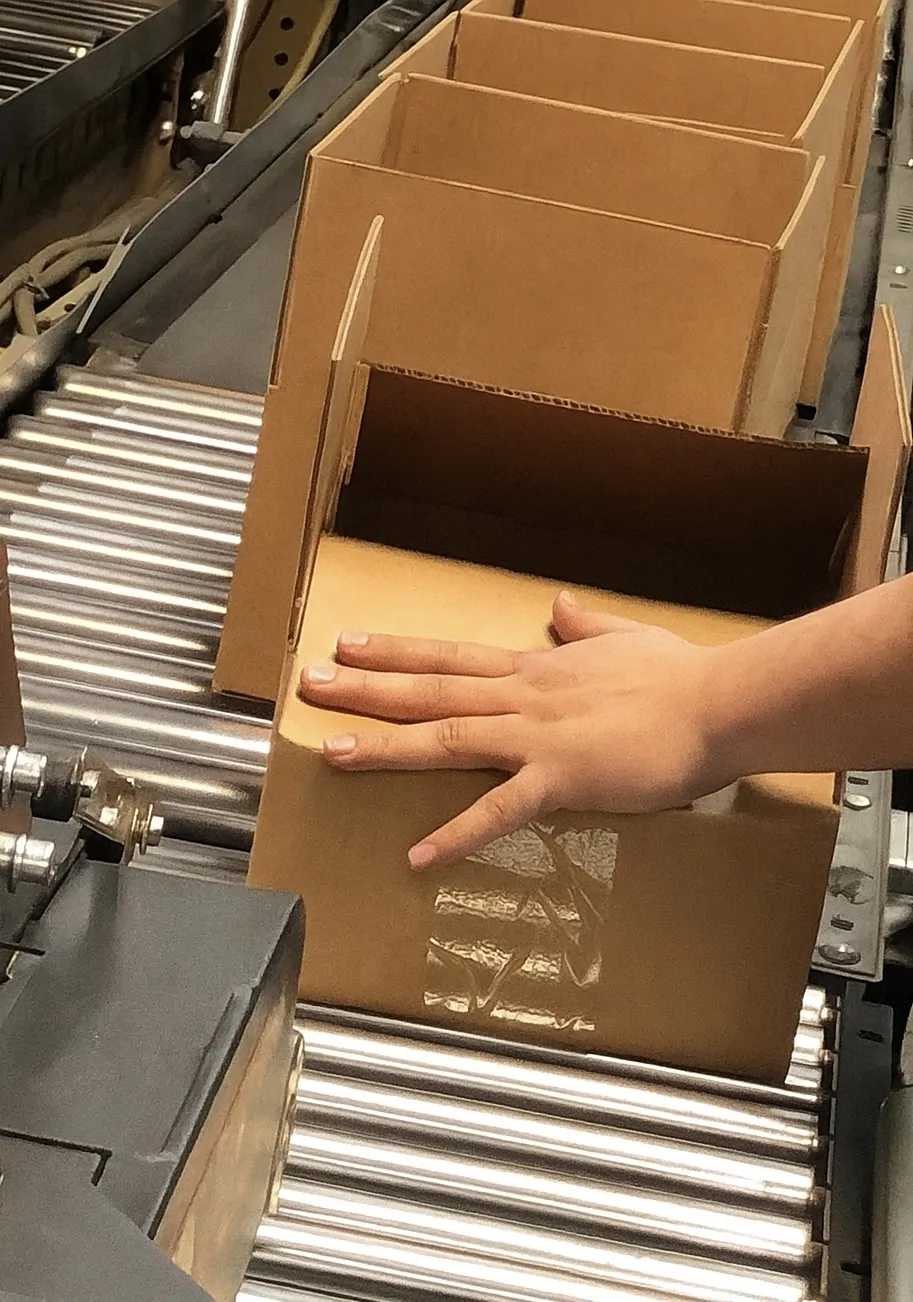


A right-sizing machine works beautifully at a distribution center. A typical DC runs 2,000–3,000 orders per shift through dedicated pack stations staffed by trained operators, with IT integration and a maintenance schedule. A retail store back-of-house has none of those things — and that gap is why almost every ship-from-store program in the country runs without right-sizing equipment.
The Footprint Problem
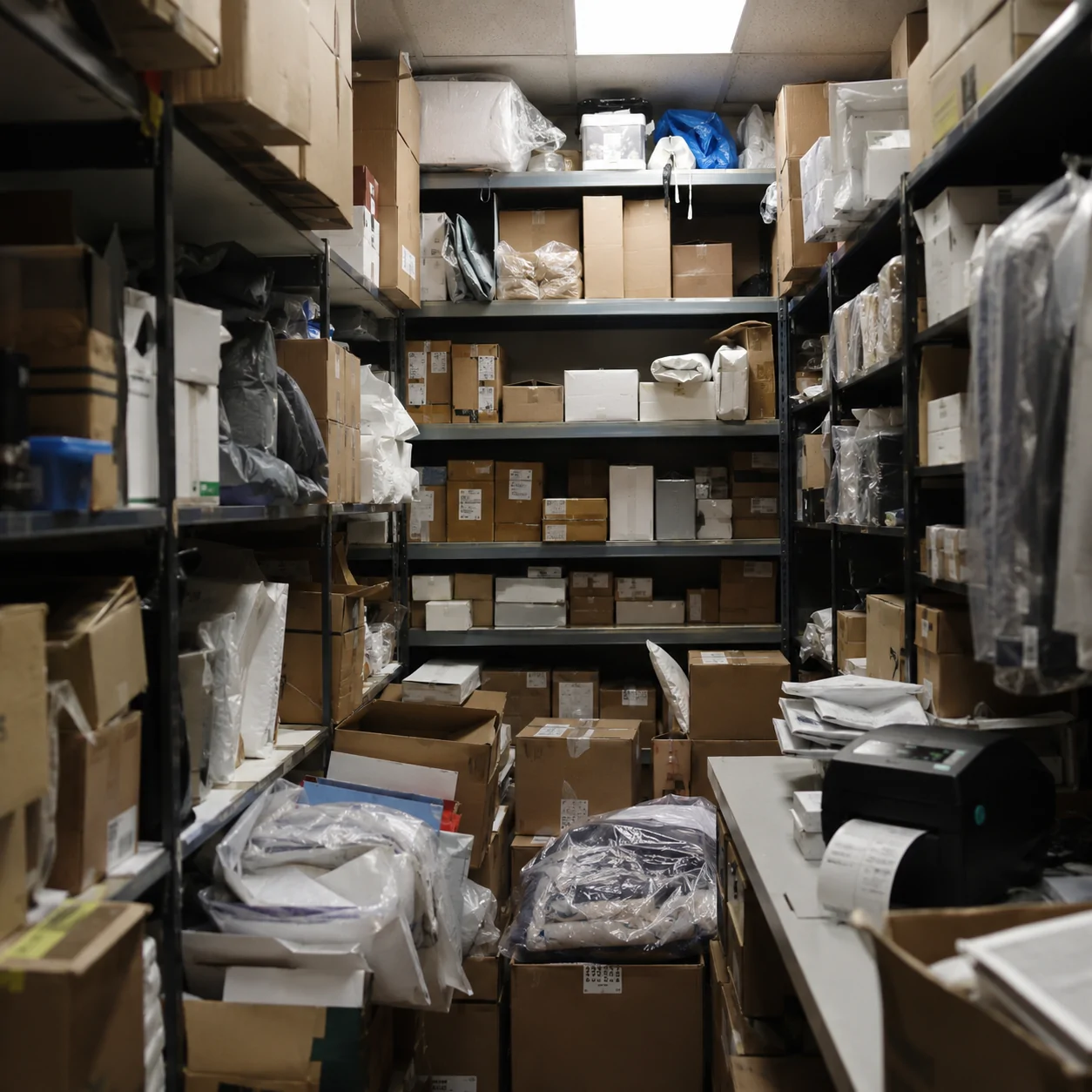
A right-sizing machine needs 200–400 square feet of floor space. The average store back-of-house is 2,000–4,000 square feet total — already allocated to inventory, returns, BOPIS staging, seasonal merchandise, and the breakroom. There’s no slack. Adding the machine means displacing something that’s already generating revenue.
The Throughput Problem
Even if the space existed, the throughput math fails. A machine engineered for 5,000+ orders per shift sits idle 95% of the time at a store doing 25–50 orders per day. The capital cost can’t amortize against per-parcel savings when the per-store parcel count is two orders of magnitude lower than a DC.
The Training and Maintenance Burden
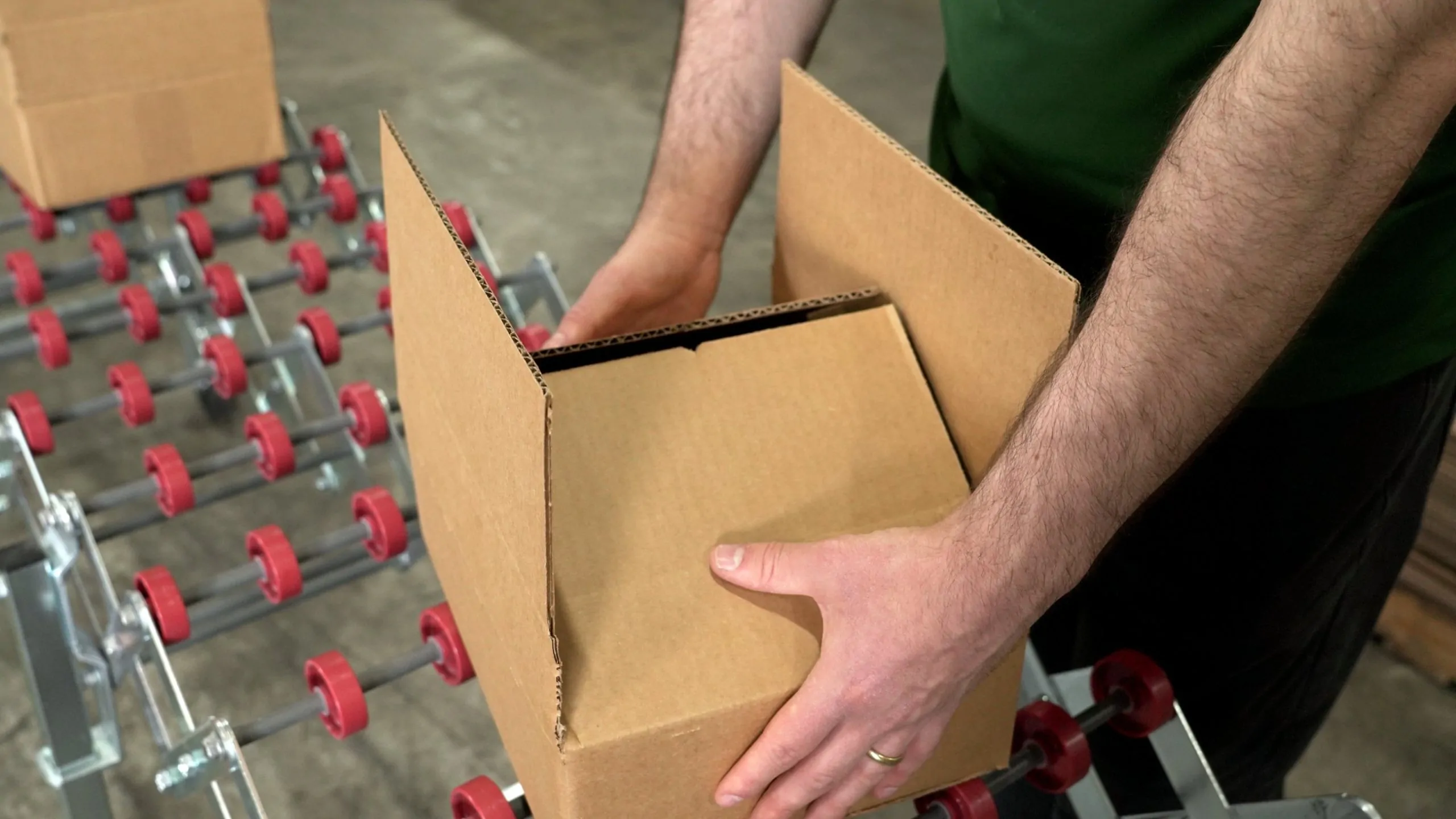
Right-sizing machines need trained operators, preventive maintenance schedules, consumables management (corrugated supply, label printer toner, tape), and IT integration with the order management system for dimensional data flow. DCs have all of this infrastructure. Stores have none of it. Deploying machines across a store network would mean hiring or training operators, scheduling maintenance across potentially hundreds or thousands of locations, managing consumables distribution, and integrating equipment that wasn’t designed for distributed deployment. The operational burden alone makes deployment impractical — before the capex conversation even starts.
What Stores Actually Need
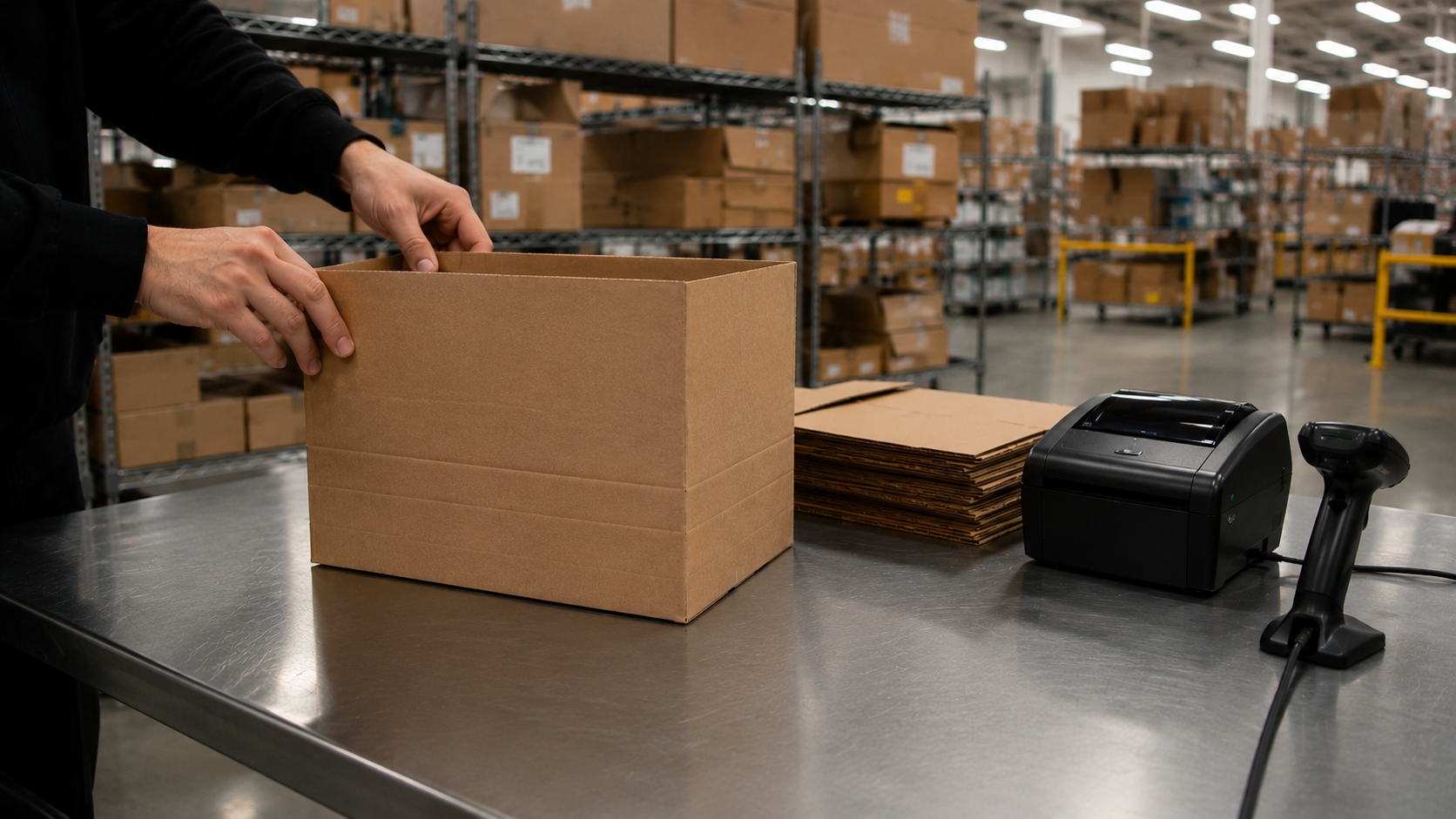
The packaging problem in stores isn’t a machine problem. It’s a SKU problem. Stores need packaging that closes at the height of each order without equipment: a single SKU that handles the full range of order profiles, zero training requirements, no back-of-house footprint beyond a normal box stack, and no maintenance, consumables, or IT integration.
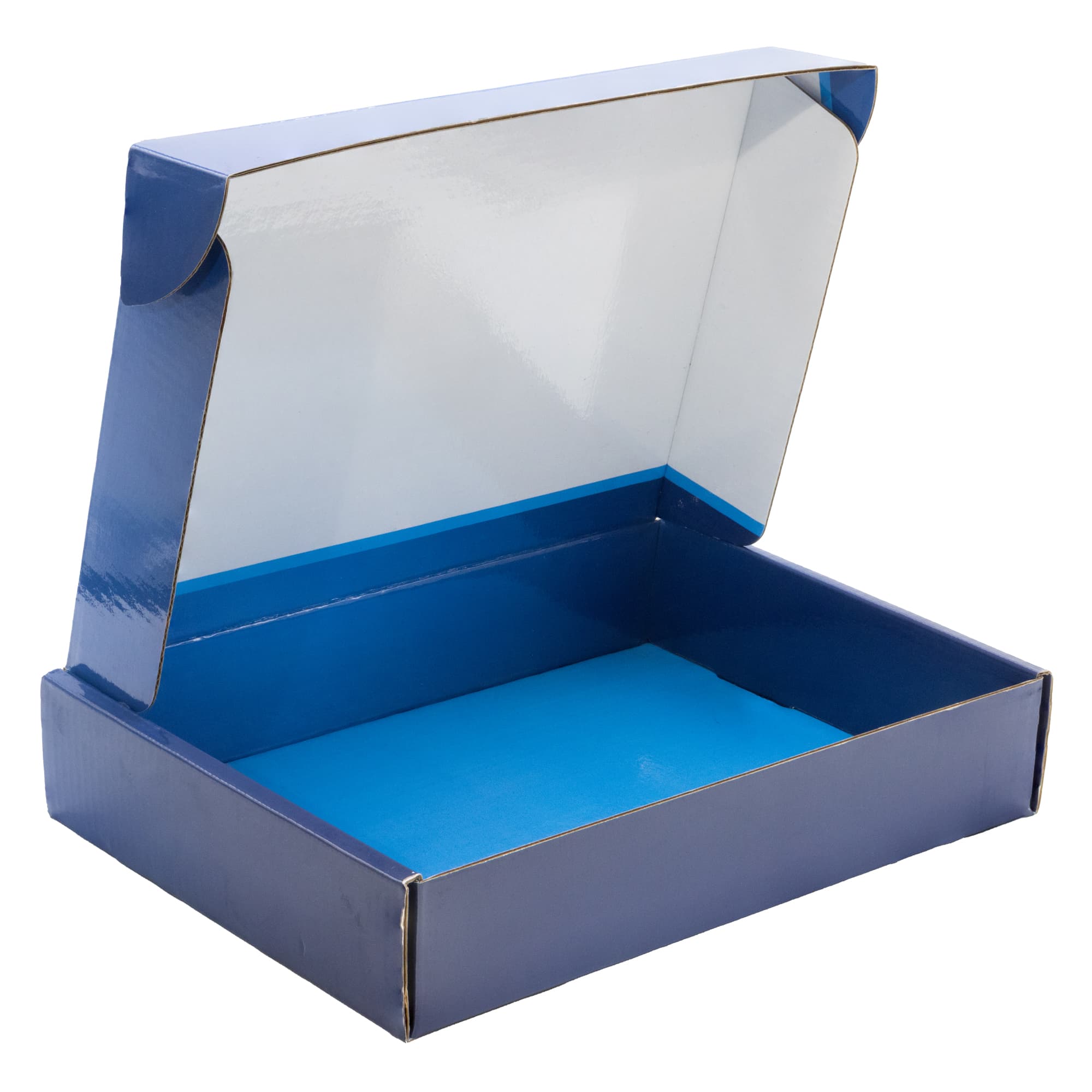
This is the design brief that drove the MVP Box®. Three patented designs cover the order-profile range that would otherwise require multiple standard box SKUs plus machinery. A store associate sets the height in one second by folding to the nearest pre-scored crease — down to half the box width. There’s nothing to maintain, nothing to train on, and nothing to fit into back-of-house square footage that doesn’t exist. For SFS programs, this isn’t a machinery alternative — it’s a different category of solution entirely, designed around the operational reality of stores rather than retrofitted from DC logic.