

Ship-from-store fulfillment was supposed to solve the last-mile problem. By turning thousands of retail locations into mini-distribution centers, retailers like Macy’s, Nordstrom, Kohl’s, and Target could ship closer to customers, cut delivery times, and put existing store inventory to work.
What no one accounted for in the original SFS economics: store-originated parcels get hit harder by dimensional weight charges than parcels packed at a distribution center. Often substantially harder.
This isn’t a carrier conspiracy. It’s a structural problem baked into how stores pack orders compared to how DCs pack them — and after the August 18, 2025 carrier rule change, the gap got materially worse.
What Is DIM Weight, Briefly
Carriers (UPS, FedEx, USPS) bill the higher of actual weight or dimensional weight. Dimensional weight is calculated by multiplying length × width × height in inches, then dividing by the carrier’s DIM divisor — currently 139 for UPS and FedEx domestic ground, 166 for USPS Priority Mail (and for some older or retail-counter carrier rates).
A 14×12×12 box weighing 3 pounds bills as 15 pounds because (14×12×12) ÷ 139 = 14.5, which rounds up to 15. The actual weight is irrelevant when DIM weight wins, which it does on most lightweight, bulky parcels — exactly the profile of store-originated orders.
The August 2025 Change That Made It Worse
On August 18, 2025, UPS and FedEx implemented a new measurement rule: every fractional inch on every dimension rounds UP to the next whole inch before the DIM calculation runs.
Under the old rule, a box measured 10.2 × 8.7 × 5.1 inches calculated as 10 × 9 × 5 = 450 cubic inches. Under the new rule, the same box calculates as 11 × 9 × 6 = 594 cubic inches. At a 139 divisor, that’s a jump from 4 to 5 billable pounds — a 32% volume increase on the same physical box.
This rule affects every carrier-shipped parcel, but it disproportionately punishes SFS programs because store-packed boxes have more empty space and are more likely to trip whole-inch thresholds.
Why DCs Got DIM Weight Mostly Right
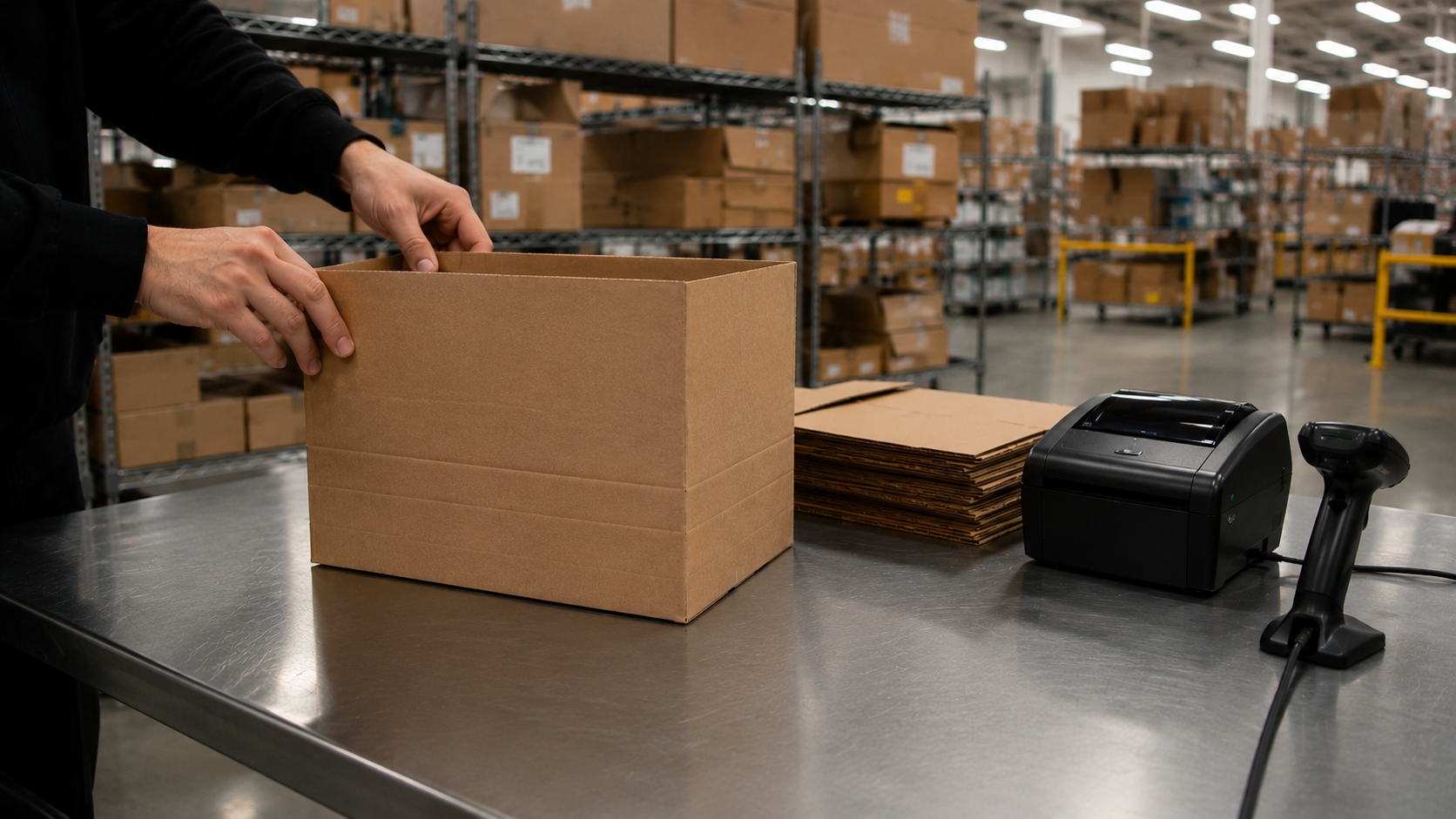
Distribution centers solved the DIM weight problem with three things stores don’t have:
Right-sizing machinery. On-demand packaging equipment builds custom-height boxes for each order. Industry sources document machinery costs ranging from $50,000 to $1.5 million in capital expenditure, with subscription pricing that amortizes against per-box savings. At DC volumes of 5,000+ orders per shift, the math works. At store volumes of 25–50 orders per day, it doesn’t come close.
Trained packing teams. DC packers do nothing but pack. They develop pattern recognition for SKU-to-box matching that store associates packing between customer interactions never will.
SKU velocity data. DCs know exactly which SKUs ship together and in what frequency, so they can stock the right box sizes in the right quantities at each pack station. Stores typically stock 4–6 box sizes total and rely on associate judgment for sizing decisions.
Why Stores Fail on DIM Weight
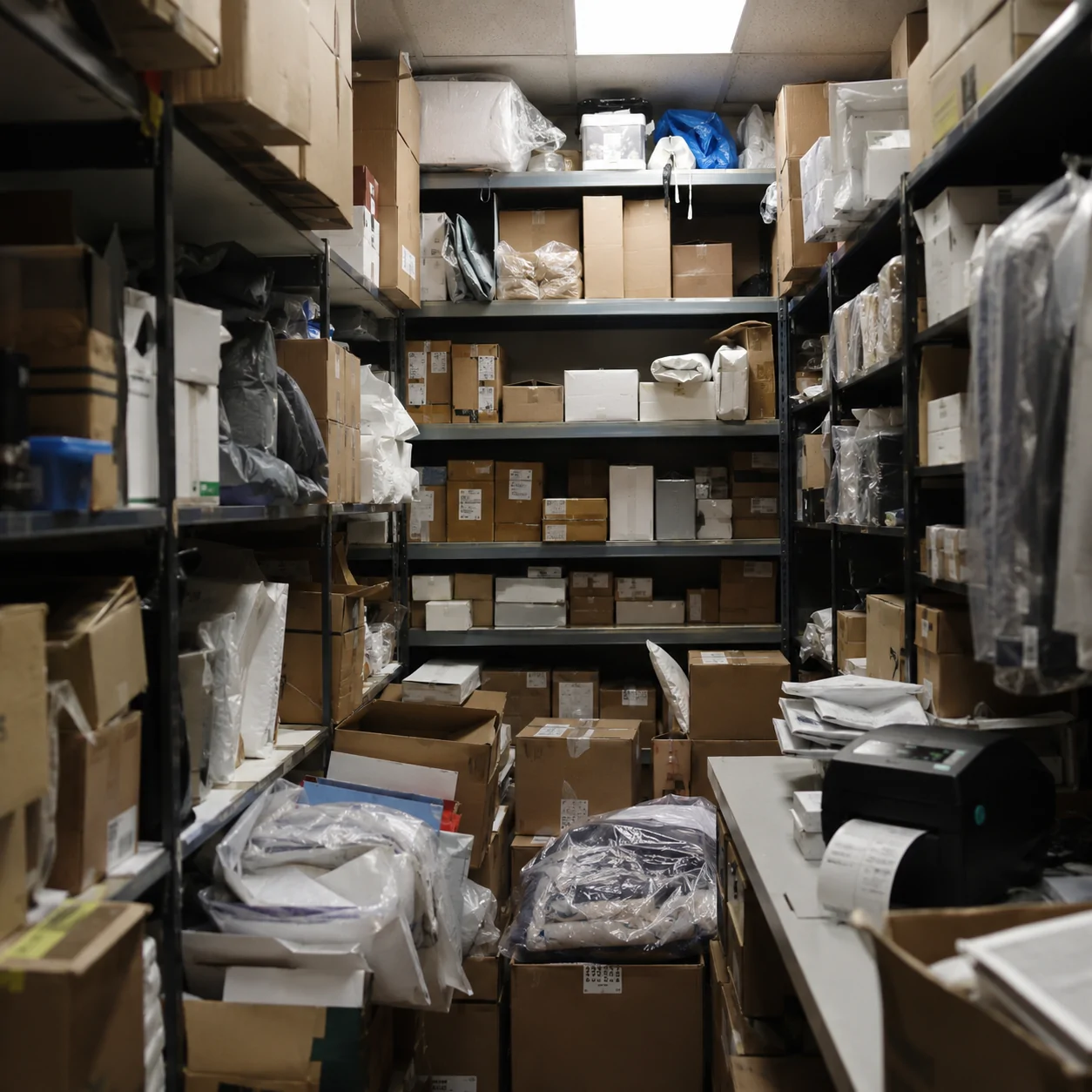
Each one of the DC advantages above is missing or compromised in a retail back-of-house. Five specific failure modes:
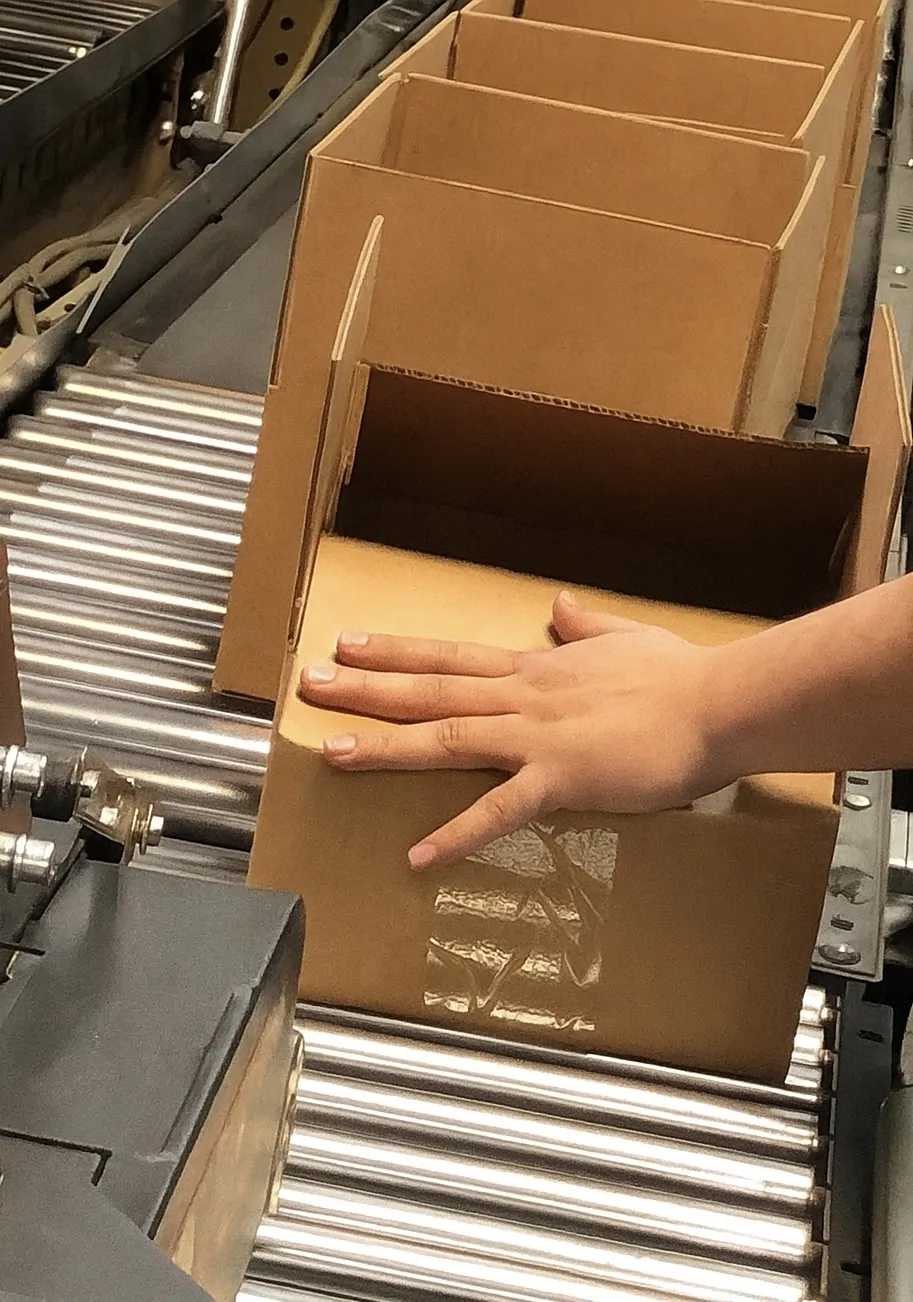
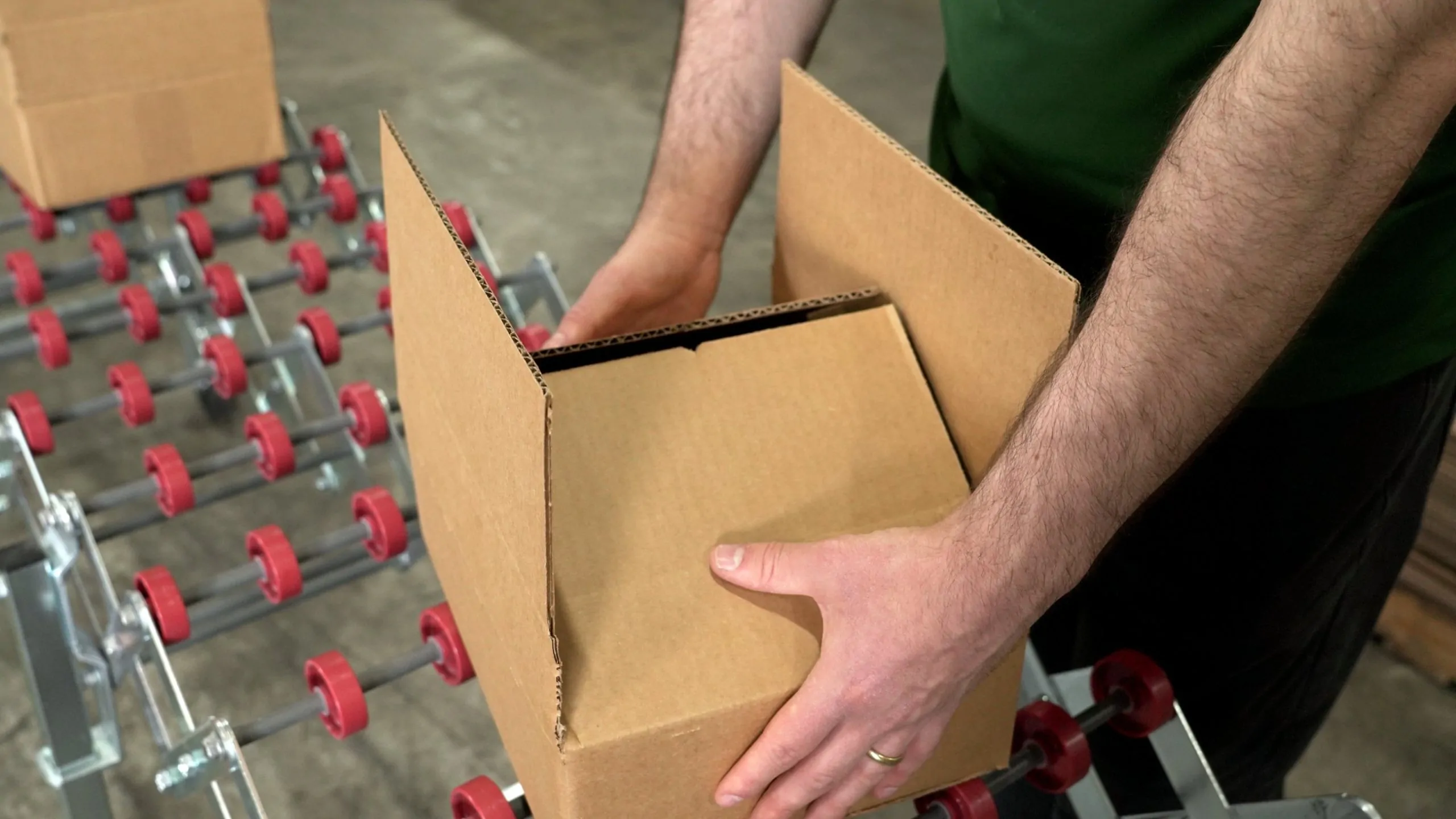
- Variable SKUs, fixed boxes. A store fulfilling a sneaker order, a sweater order, and a small electronics order in the same hour needs three different parcel heights. With 4–6 standard box SKUs, the associate grabs the closest fit — almost always the next size up.
- No room for equipment. A right-sizing machine needs 200–400 square feet of floor space, plus power, ventilation, and IT integration. Retail back-rooms are already overcommitted to inventory, returns processing, BOPIS staging, and seasonal merchandise. There’s no slack.
- Untrained packers. Store associates pack orders between customer service interactions, returns, and floor coverage. They optimize for speed, not parcel efficiency. This isn’t a training failure — it’s a role design problem.
- No store-level SKU velocity data. Corporate may know the national SFS order profile, but Store #4471 doesn’t know its own pattern well enough to stock an optimized box mix.
- Carrier-level penalty escalation. On top of base DIM charges, FedEx and UPS apply Additional Handling Surcharges to parcels exceeding certain dimensional thresholds, with a 40-pound minimum billable weight on AHS–Dimension shipments. Store-packed orders trip these thresholds more often than DC-packed orders because of the empty-space problem.
Why The Cost Stays Quiet
The SFS DIM weight tax is almost invisible to executives because no single function owns the full P&L line. Carrier invoices show DIM charges aggregated across the network — stores don’t get billed individually. Void fill is bought at corporate and distributed; higher consumption shows up as a procurement variance, not an SFS cost. Returns processing is owned by a different team. Customer experience feedback about oversized boxes lives in marketing dashboards, not operations.
Each function sees a piece of the elephant. No one sees the whole animal. SFS programs scale past the point where the hidden packaging cost overtakes the visible labor and delivery benefits — and the model still looks profitable on the slide.
The Fix, Without Capital Expenditure
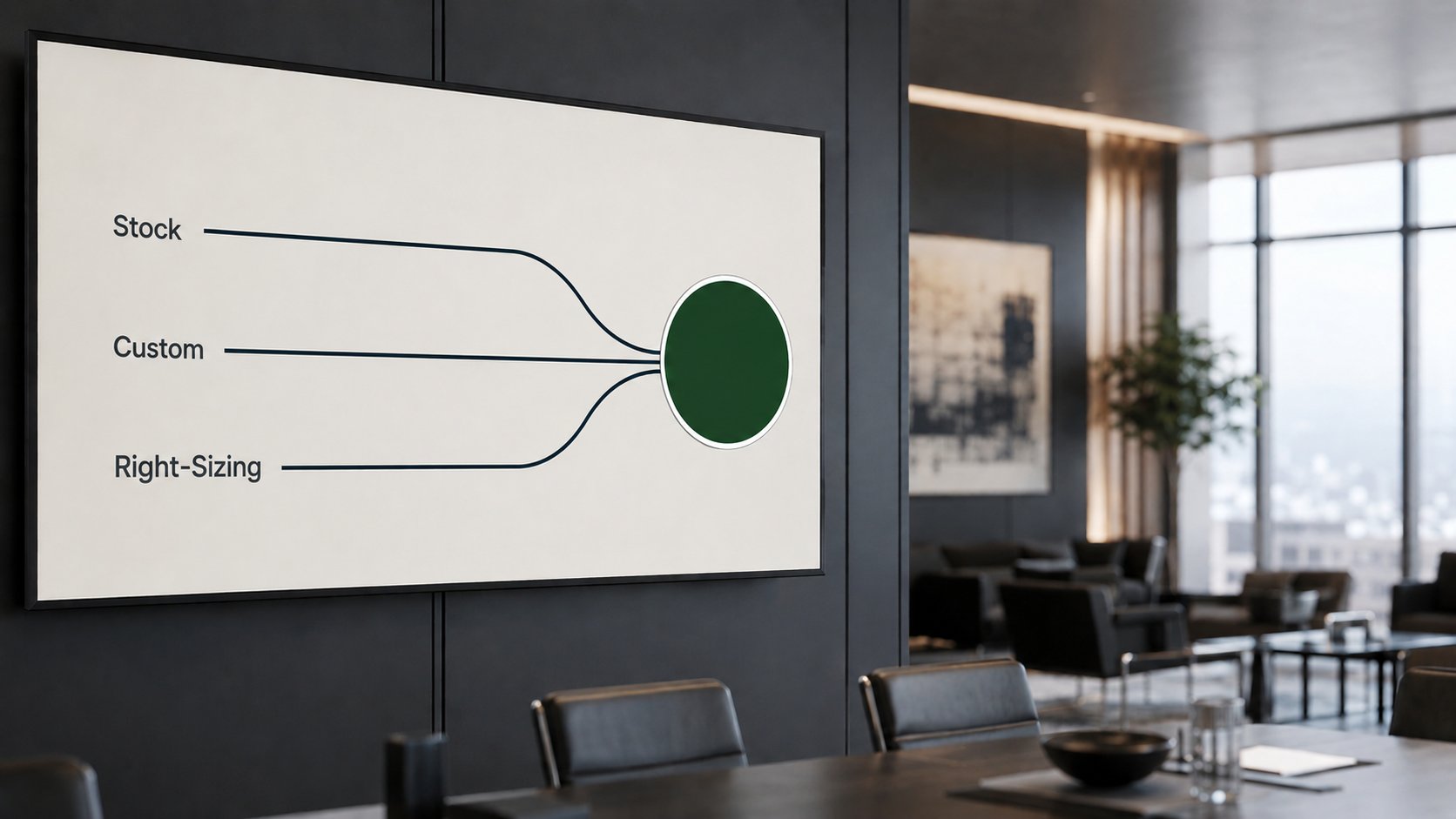
The cleanest solution to SFS DIM weight is packaging that folds down to the height of the order, without machinery, without training, without back-of-house footprint.
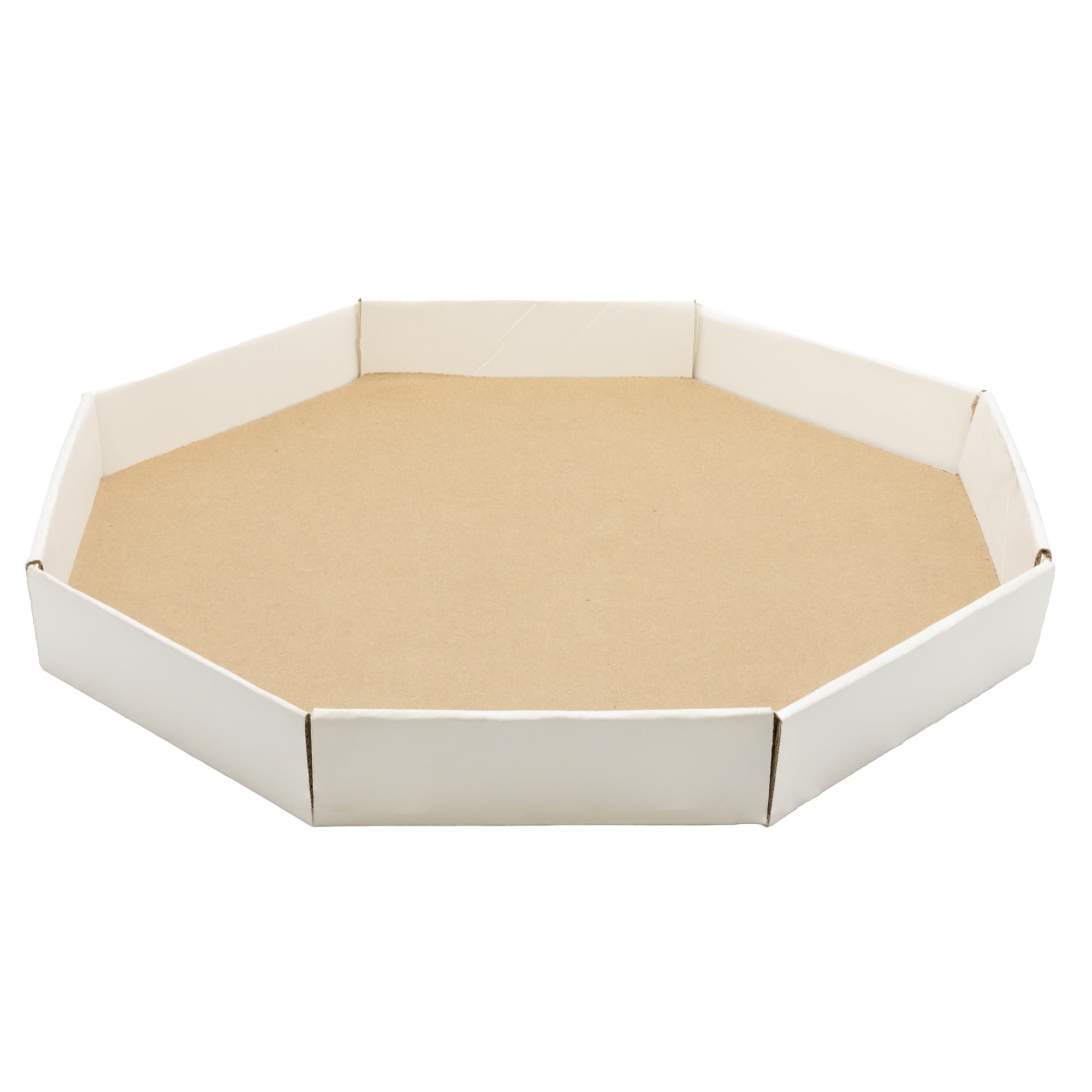
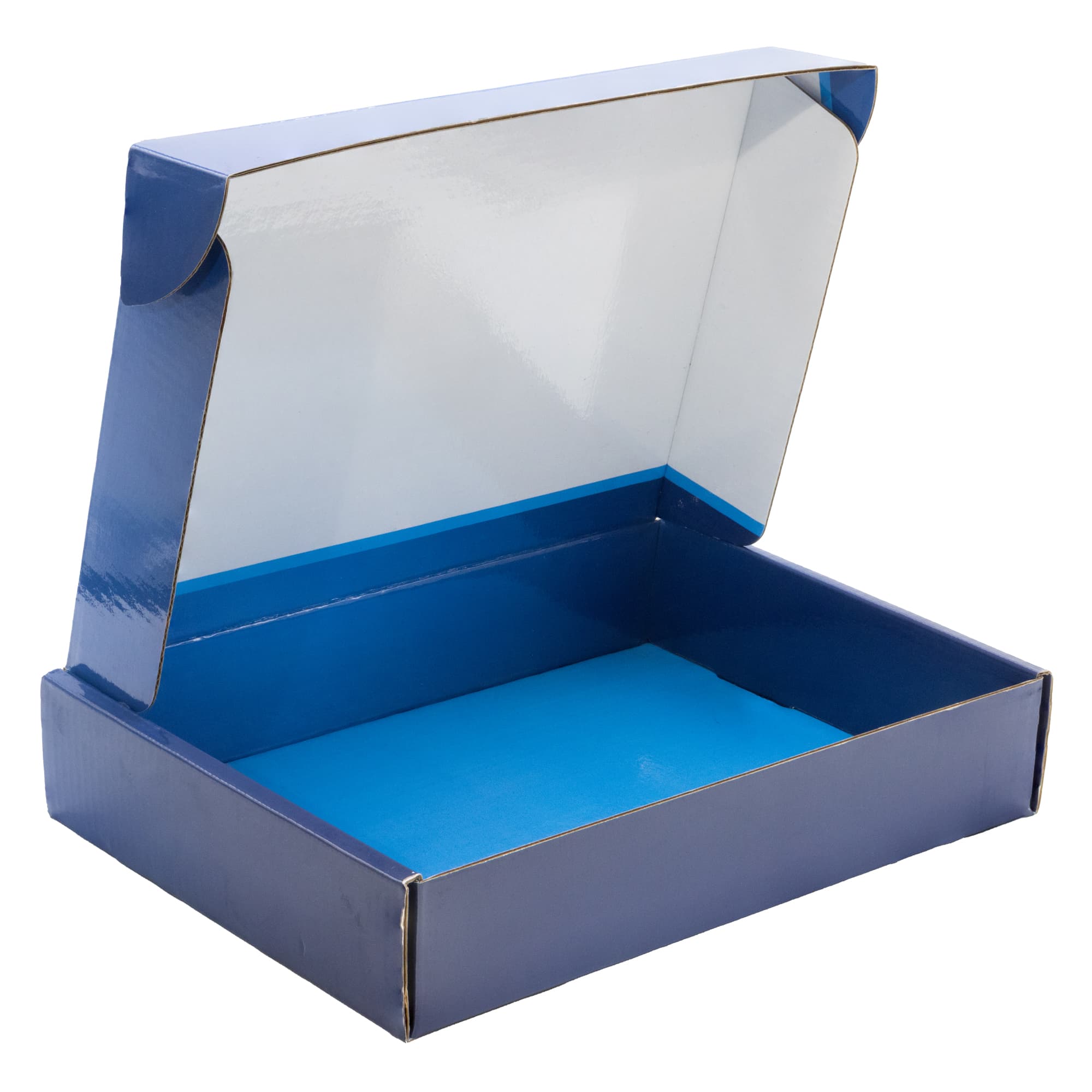
The patented MVP Box® was designed for exactly this problem. A single corrugated SKU pre-scored at multiple heights lets a store associate match parcel height to contents in one second, with no equipment, no training, and no back-of-house footprint added. Box height folds down to as much as half the box width — a meaningful DIM weight reduction on every store-originated parcel.
Industry equipment vendors publicly claim right-sizing can cut DIM weight charges by up to 33%. MVP Box delivers right-sizing through pre-scored corrugated rather than machinery — making it deployable to a store network in the time it takes to ship boxes.
See how MVP Box solves the SFS DIM weight problem in 1 second →
For SFS programs running at meaningful scale, the conversation typically starts with a savings analysis against actual shipment data. Send a sample of your store-originated parcel dimensions and carrier invoices, and we’ll model the math against your current packaging mix.