

Ship-from-store (SFS) programs lose a meaningful share of parcel carrier spend to dimensional weight charges on oversized boxes. The fix is right-sizing the carton at the pack point — but the box-on-demand machines that solve this in distribution centers don’t work at store level. This post explains why store-based fulfillment needs its own packaging category, and how MVP Box®, a patented regular slotted container (RSC) with pre-scored fold-down heights, was built specifically for it.
Supply chain leaders at most large national retailers will tell you SFS is now table stakes for competitive omnichannel. Ask the same teams whether SFS is profitable on a per-parcel basis, and the answers get less confident. The single largest hidden cost is almost always the box itself.
Most SFS programs ship in standard fixed-size cartons that are two to four inches taller than the product inside. Every one of those inches gets converted into billable dimensional weight by the carrier, every void inch gets filled with material an associate has to grab and stuff, and every additional carton SKU consumes back-room shelf space the store does not have to spare. Multiply that across a national footprint and the math is no longer rounding error.
Why Ship-From-Store Packaging Is Its Own Category
SFS is not warehouse fulfillment with a smaller footprint. It is a fundamentally different operating model, and the packaging decisions that work in a DC fail at the store level for four reasons:
- Variable-skill labor. Pickers and packers in a DC are dedicated, trained, and measured on throughput. Store associates are cross-utilized between sales floor, receiving, and fulfillment, and they often turn over in months rather than years.
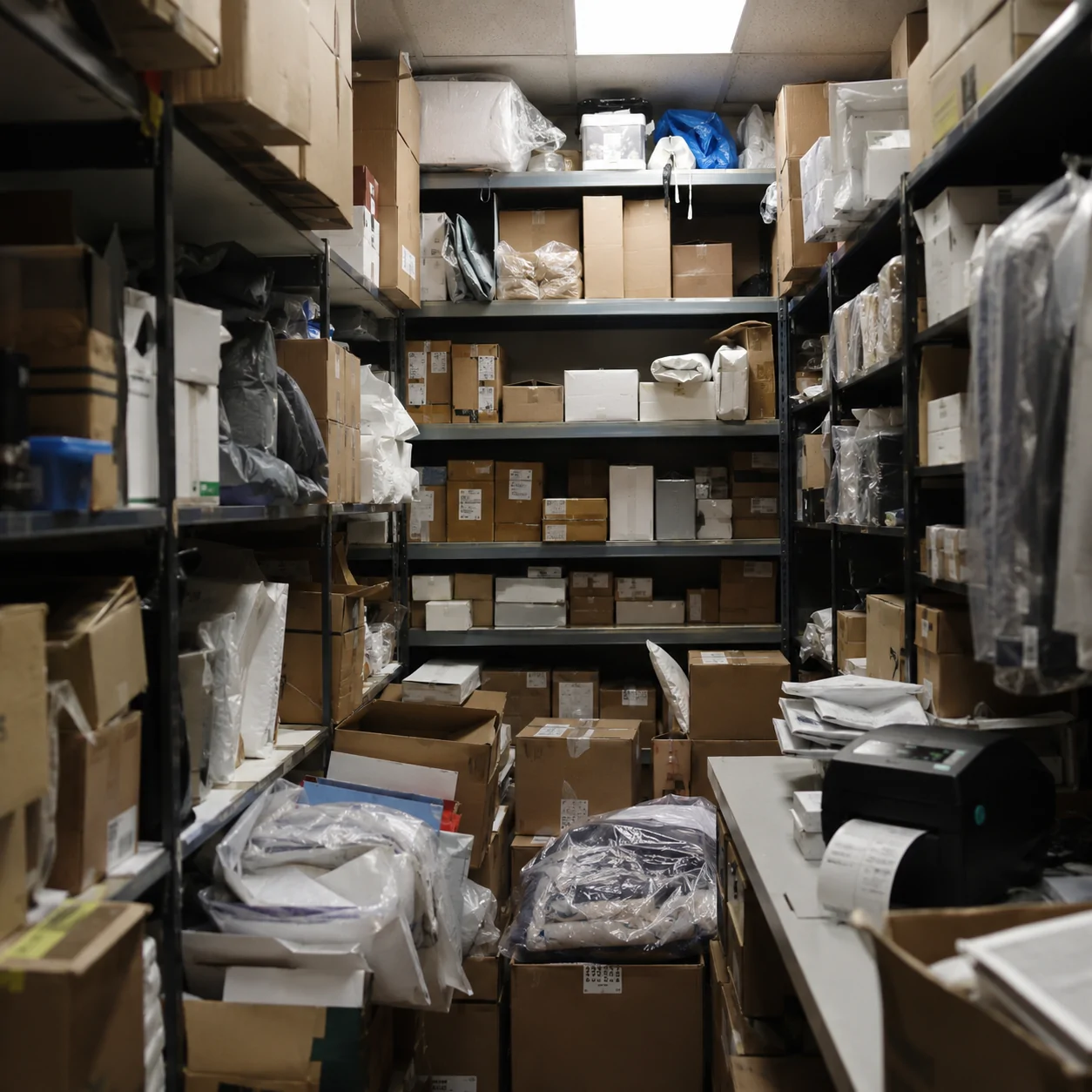
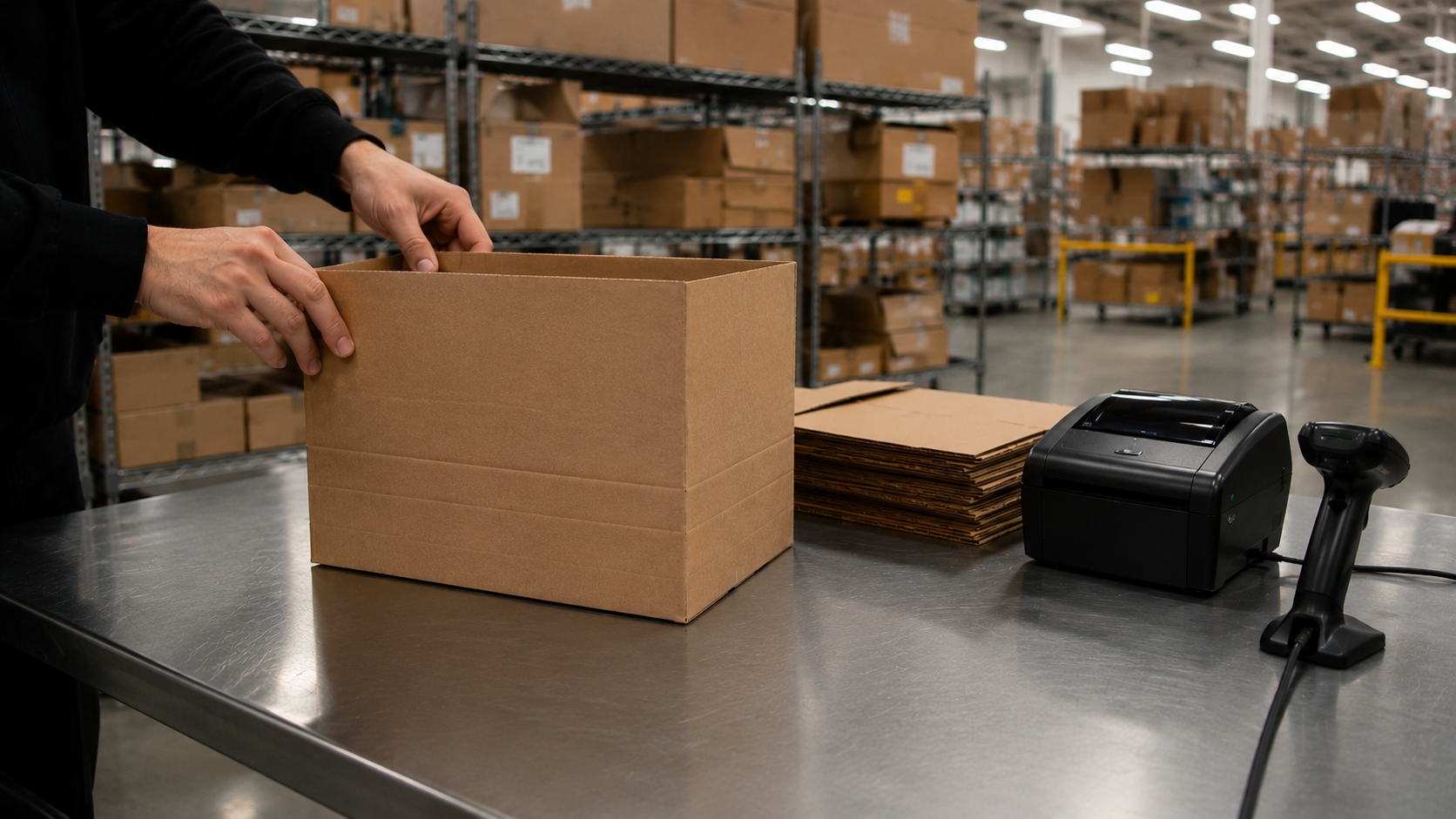
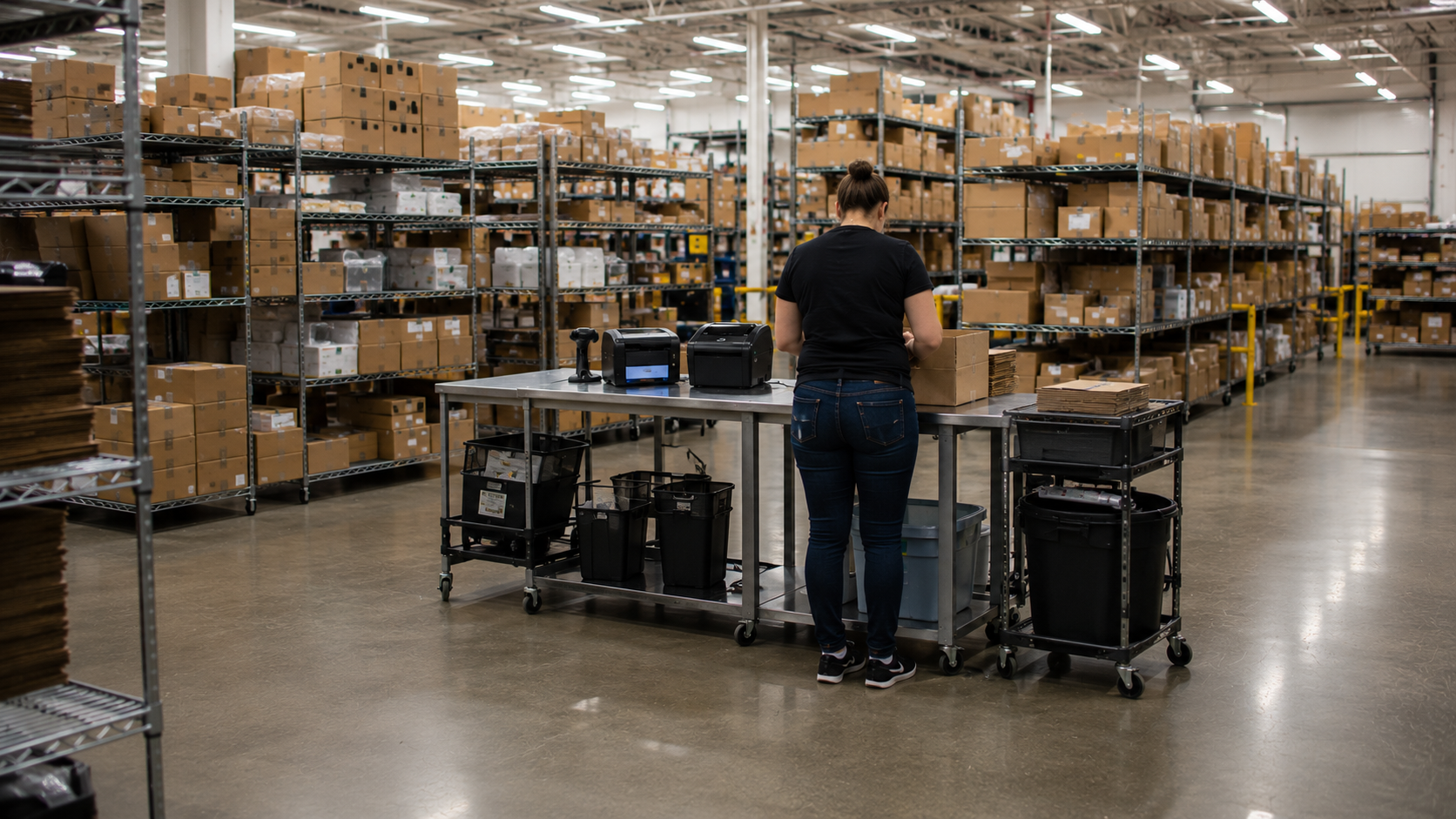
- No dedicated pack station. The “pack station” in a store is usually a folding table in the back-room. There is no conveyor, no in-line scale, no automated dimensioner, no WMS-driven box recommendation.
- No scale-driven SKU rationalization. A DC can justify ten or twelve box SKUs because each one runs through high volume. A store fulfilling 100–300 SFS orders per week cannot — every carton size on the shelf is one less spot for sellable inventory.
- Inbound freight overhead. Boxes arrive at every store individually, often on the same trucks as sellable goods. The more SKUs, the more replenishment complexity and the more stock-outs.
The result: a packaging decision that looked optimized at the DC level becomes a margin leak the moment it gets rolled out to 500, 1,500, or 4,000 stores.
The Hidden Cost Layers in SFS Packaging
Most retailers running SFS under-count four costs. Each is small on a single parcel. Each compounds at scale.
1. DIM weight surcharges on oversized parcels
Carriers bill ground and air shipments on the greater of actual weight or dimensional weight (length × width × height ÷ DIM divisor). Most SFS orders ship in boxes 2–4 inches taller than the product, and every one of those inches inflates the DIM calculation directly.
Right-sizing the carton height to the product lowers billable DIM weight on every parcel that would otherwise ship in a box taller than its contents, which is what fulfillment operations see when MVP Box replaces fixed-size cartons. Across a national SFS program, that percentage applied to total annual carrier spend is rarely a small number. Actual results vary by parcel mix, carrier contract, DIM divisor, and zone profile.
2. Back-room shelf space consumed by box SKUs
Carrying a full lineup of box sizes per store means many spots of back-room shelving permanently dedicated to corrugated. In a 4,000-square-foot back-room already competing for space with receiving, returns, online order staging, and seasonal inventory, that is a real opportunity cost — and it repeats at every location in the network.
3. Associate labor on void fill and box selection
Every SFS pack involves two micro-decisions: which box, and how much void fill. Each decision takes only seconds, but multiplied by hundreds of orders per week per store, the labor adds up — and so do the mistakes (wrong box chosen, too much fill, too little fill, damage claims downstream).
4. Damage and customer experience cost
Products that rattle in oversized boxes arrive damaged or visibly mishandled at a higher rate. The downstream costs — return processing, replacement shipments, support contacts, lost lifetime value — are notoriously hard to attribute back to the box, but anyone who has audited customer service tickets at scale knows the linkage is real.
These four cost layers all share the same root cause: the box is the wrong size. Fix the box and you fix all four at once.
Why Standard Right-Sizing Solutions Don’t Fit SFS
The packaging industry has solved the right-sizing problem at the DC level. It has not solved it at the store level. Here is why the standard answers fail when you try to push them down to retail:
Box-on-demand machines (fanfold systems)
In a DC, box-on-demand machines are the right answer. At the store level, they are a non-starter:
- Capital cost. $600K–$1.4M+ per machine. Multiply by store count and the business case collapses before it starts.
- Floor space. These machines have footprints measured in pallets, not square feet. Store back-rooms do not have that space, and giving it up means giving up inventory capacity.
- Service and supply chain. Maintenance contracts, technician availability, and proprietary fanfold board supply chains do not scale cleanly to 1,000+ geographically distributed locations.
- Operational complexity. These are industrial machines. They require trained operators, scheduled maintenance, and uptime monitoring. None of that fits the retail store labor model.
Pre-cut multi-depth boxes
Multi-depth cartons reduce SKU count somewhat, but they still require an associate to measure the product, select the right height score, and use a box cutter to trim. That is a decision plus a tool plus a safety risk, repeated on every order. It also still requires multiple SKUs on the shelf, since one multi-depth box does not span the full product range.
Standard fixed-size RSC cartons
This is what most SFS programs use today, and it is the worst answer at scale. Every parcel ships in a fixed cube regardless of product size, every empty inch is billable air, and the back-room carries a shelf of box SKUs to give associates a fighting chance at picking something close to right.
The gap MVP Box fills
What store-level fulfillment needs is something that combines DC-grade right-sizing with retail-grade simplicity: one carton, no equipment, no decisions, no training. That is the brief MVP Box was designed against.
What MVP Box Changes for SFS Operations
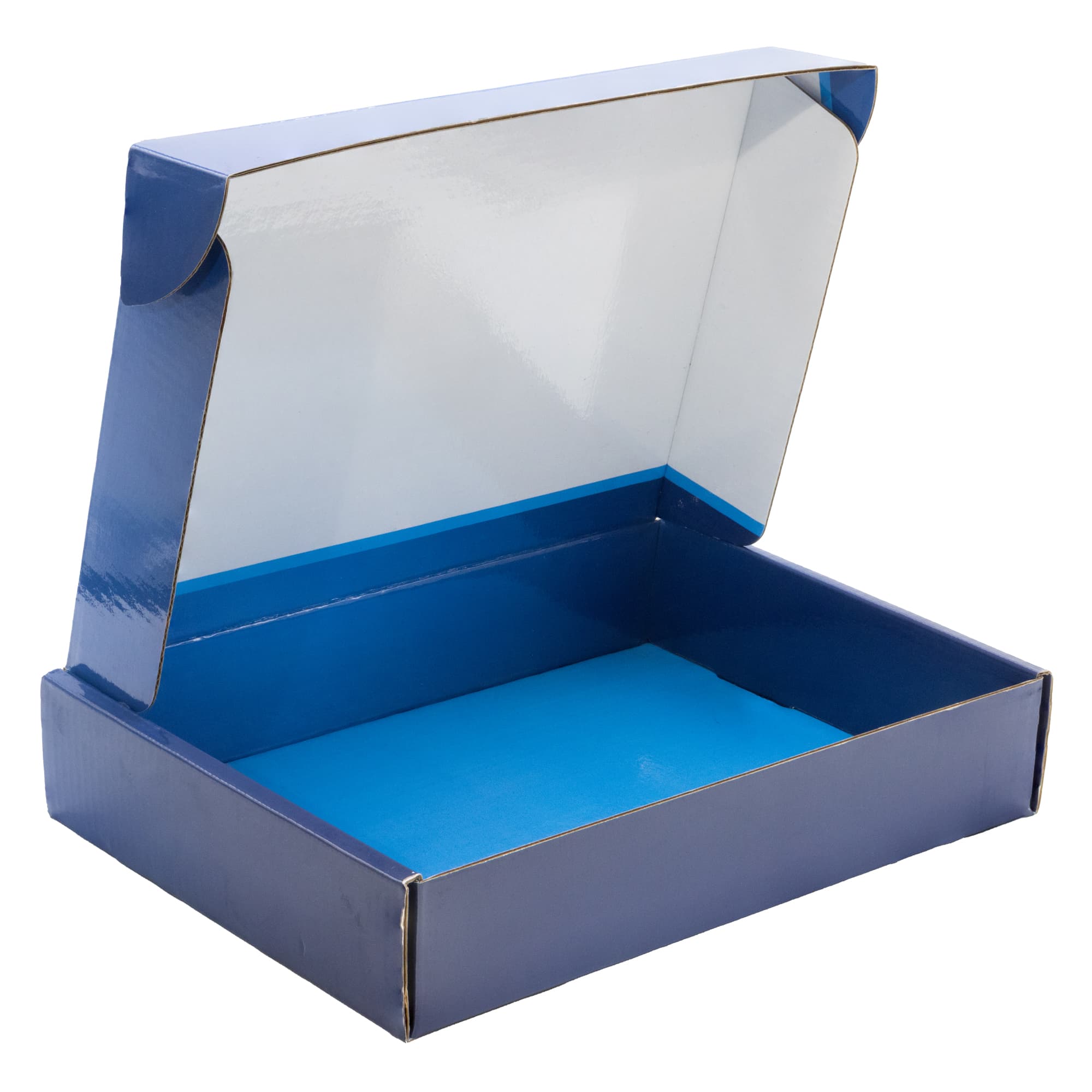
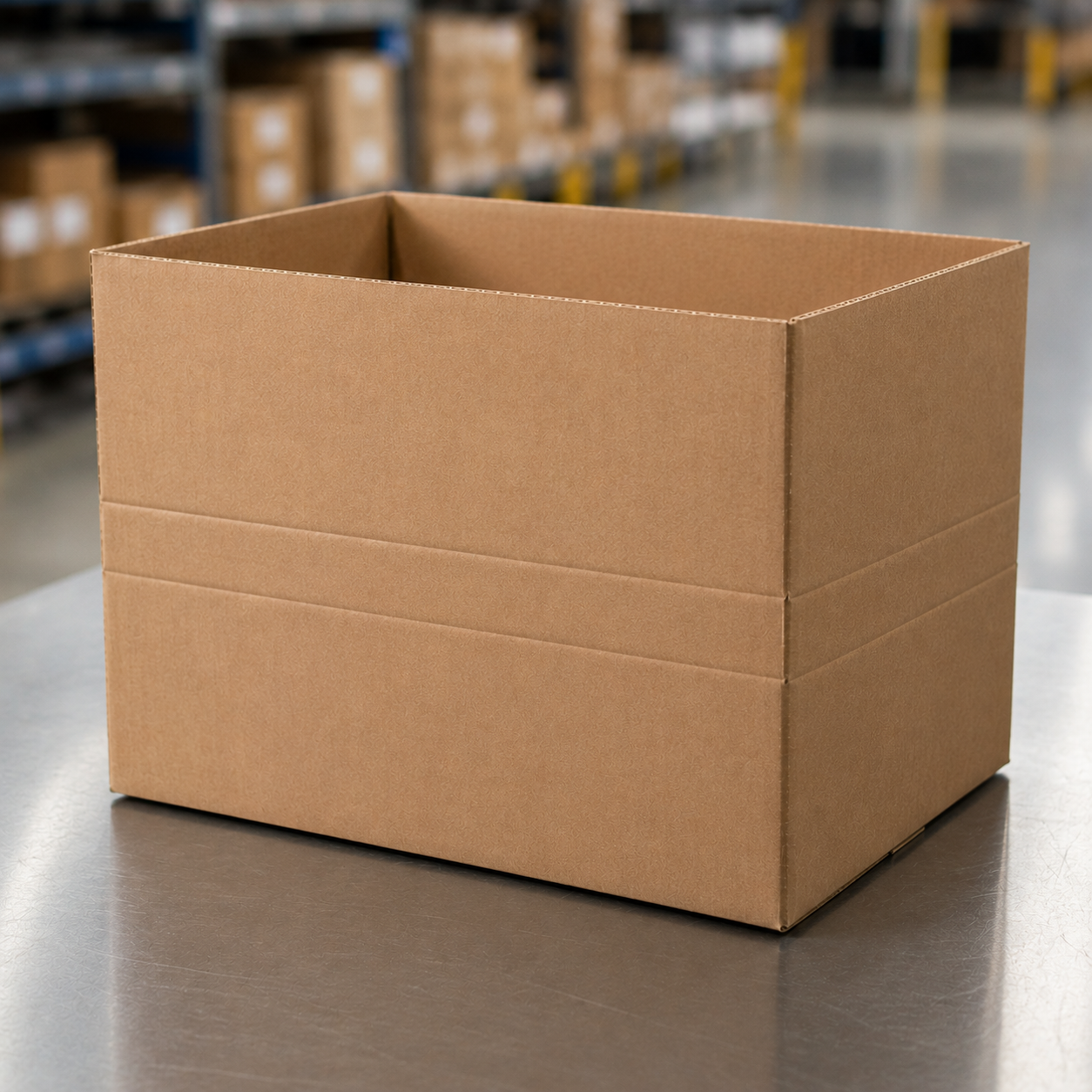
MVP Box is a standard regular slotted container with pre-scored fold-down heights built into the side walls. Once folded to the chosen height, the box is a flat-topped, flat-bottomed RSC that ships, seals, and stacks exactly like any other carton. The difference is that one MVP Box SKU covers the height range that previously required a lineup of different cartons.
Here is what that means operationally for an SFS program:
One SKU replaces many in the back-room. Back-room shelf reclaim at every store. Inbound freight consolidated to fewer SKUs and fewer purchase orders. Fewer reorder cycles, fewer stock-outs, simpler replenishment logic for store ops teams.
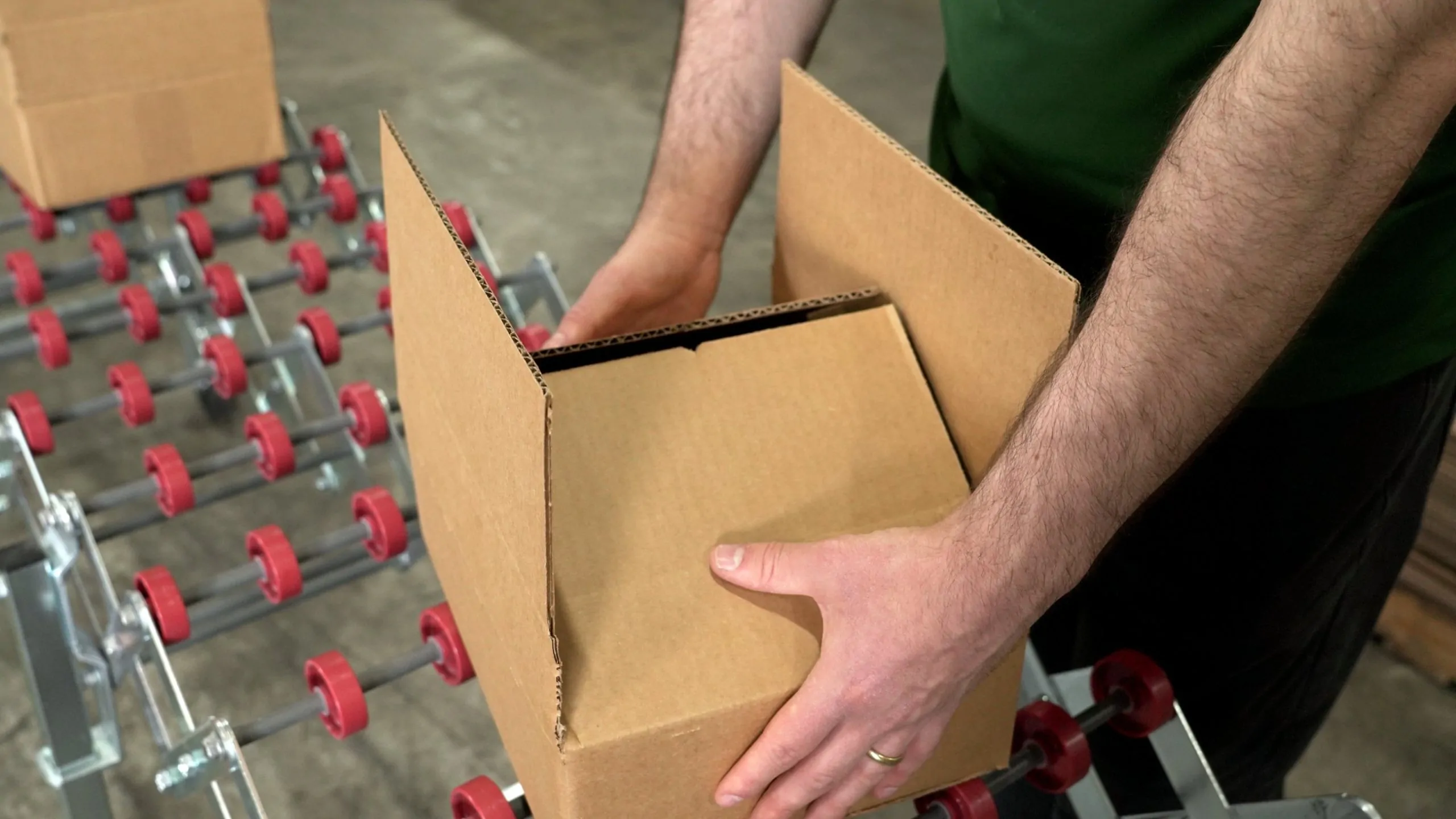
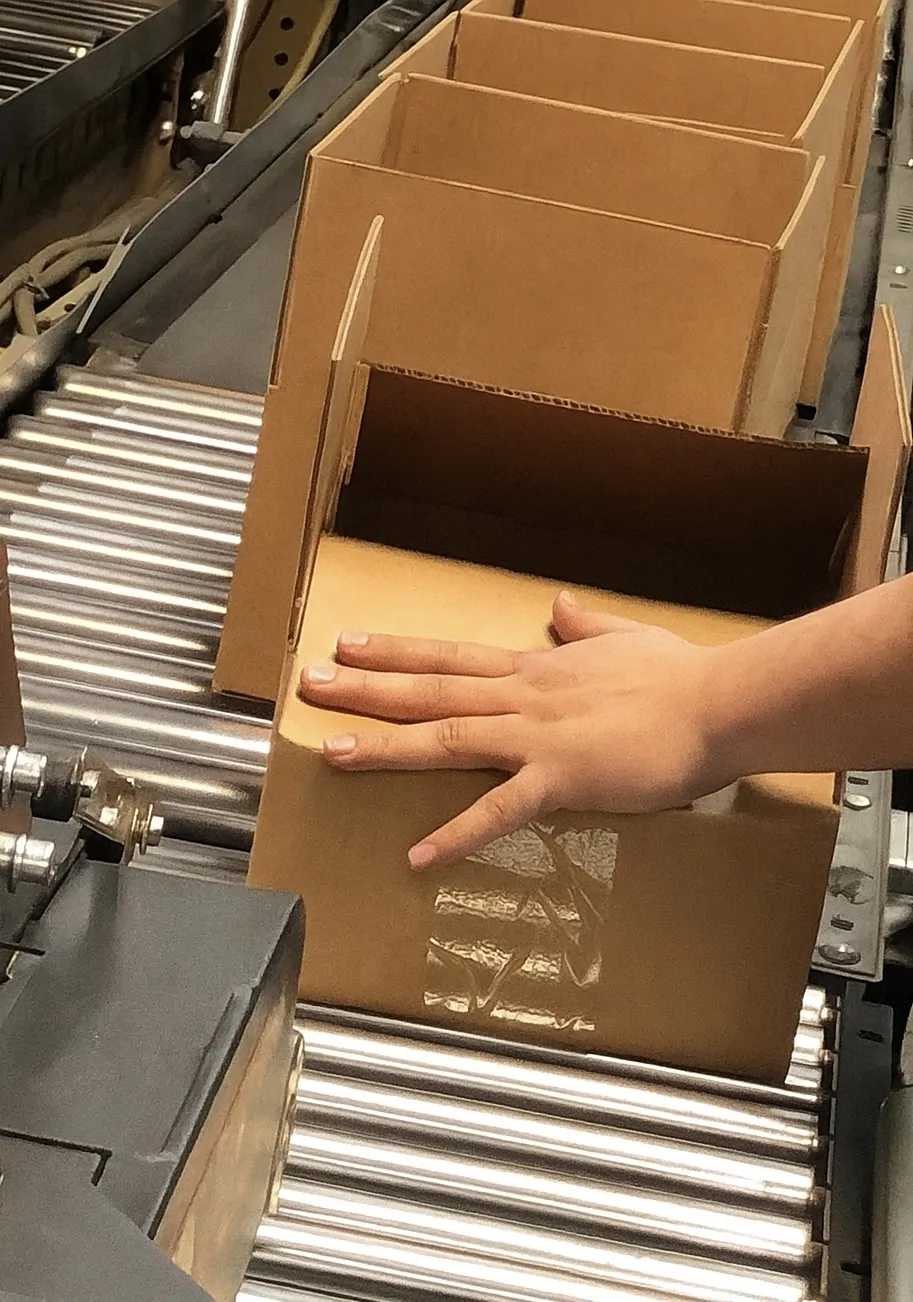
One-second fold-down, no tools, no training. Associates push the box down to the nearest pre-scored line that fits the product. No measuring, no cutting, no decisions, no box cutters. If an associate can fold a standard box, they can use MVP Box — onboarding measured in minutes, not shifts.
DIM weight reduction on every parcel. Lower billable weight per shipment by right-sizing the box height to the actual product. Carrier general rate increases compound annually, so the savings curve gets steeper over time, not flatter.
Void fill reduced or eliminated on most right-sized SKUs. Void fill drops on shipments where the box is folded down. That is less air pillow inventory to stock at the store, less labor to apply it, and less material to dispose of on the receiving end.
Works with whatever the store already has. MVP Box is corrugated, not equipment. It runs through any standard carrier shipping platform, seals with standard 2″ or 3″ carton sealing tape, and works with hand tapers or automated case sealers without any machine changes. No software integration, no equipment investment, no IT project.
Onboarding in under five minutes. This matters more in retail than anywhere else. High turnover, part-time staffing, and seasonal surge hiring make any solution that requires real training a non-starter at scale. MVP Box does not require training — it requires a demonstration.
The Financial Case at Retailer Scale
The math on a national SFS program is mostly a multiplication exercise. The exact savings depend on parcel mix, current box SKU lineup, carrier contracts, and zone profile — but the magnitude is what matters.
Take a hypothetical national retailer with 1,500 stores, each fulfilling roughly 400 SFS parcels per week, operating 50 weeks per year:
- Annual SFS parcel volume: 1,500 × 400 × 50 = 30 million parcels per year
- DIM weight reduction per parcel: varies with product mix, carrier contract, DIM divisor, and current box lineup
- Applied to annual carrier spend on SFS shipments at this volume, even a modest per-parcel reduction compounds into a large recovery. Send parcel-level shipment data and Brandt Box will model the recovery against your current packaging mix.
The same math at mid-size scale
The case does not require a 1,500-store footprint to work. Take a hypothetical mid-size national retailer with 400 stores, each fulfilling roughly 150 SFS parcels per week, operating 50 weeks per year:
- Annual SFS parcel volume: 400 × 150 × 50 = 3 million parcels per year
- DIM weight reduction per parcel: varies with product mix, carrier contract, DIM divisor, and current box lineup
- The mechanism is identical and the capital investment is still zero. Model the recovery from your own parcel data before committing.
Same zero-capital profile. Same five-minute onboarding. Same compounding effect against annual carrier rate increases. The threshold where MVP Box is worth piloting is not “national mega-retailer” — it is “enough SFS parcel volume that empty air in the box is a budget line item.”
That savings figure does not include:
- Void fill material reduction on right-sized SKUs
- Associate labor savings on box selection and void fill application
- Back-room shelf space reclaimed across every location
- Reduced damage claims and downstream service costs
- Capital and maintenance avoided versus a per-store box-on-demand investment
And the capital required to capture it is zero. MVP Box is consumable corrugated. There is no equipment to install, no integration to scope, no implementation timeline to negotiate with IT. Savings start on the first order.
The actual percentage for any specific retailer requires a custom savings analysis from real shipment data. Brandt Box will build that analysis on request — send parcel-level data for a representative store cluster and the team will model the savings against your current packaging mix.
Why This Matters More Now
Three forces are pushing SFS packaging from “operational nice-to-have” to “margin-critical”:
- Annual carrier general rate increases. Ground and air rates have moved up every year for the better part of a decade, with no sign of reversal. Every additional inch of carton height costs more this year than it did last year.
- DIM divisor changes. Carriers have tightened DIM divisors multiple times in the last several years, which mechanically raises billable weight on the same physical parcel. Right-sizing the parcel is the only structural defense.
- Retail margin compression. SFS was originally subsidized inside broader omnichannel investment budgets. As omnichannel matures, finance teams are pushing fulfillment-cost-per-order onto the P&L of the channel, and “just absorb the shipping cost” is no longer a viable long-term answer.
The retailers that win the next five years of SFS economics are the ones that take cost out of every parcel without adding capital or complexity to the store.
What an MVP Box Pilot Looks Like
The activation energy is intentionally low. A typical pilot runs like this:
- Send shipment data. Parcel-level dimensions, weights, zones, and current box SKU mix for a representative store cluster or product category.
- Brandt models savings. Conservative DIM weight reduction, void fill reduction, and SKU consolidation estimates against your current packaging spend.
- Pilot on one cluster. One DMA, one store format, or one product category — whatever is operationally cleanest to isolate.
- Measure the deltas. DIM weight reduction per parcel, void fill consumption change, associate feedback, damage rate.
- Scale to network. If the pilot numbers work, roll forward.
No proprietary equipment to remove if it does not work out. No software integration to unwind. The downside is bounded; the upside compounds with every parcel.
The Bottom Line
SFS programs were stitched together quickly. The packaging layer is one of the few that can be cleanly upgraded without disrupting anything else — no system migration, no labor retraining, no capital request. MVP Box is the only patented right-sizing solution built specifically for the operational profile of store-based fulfillment, and the financial case gets stronger the larger the network.
If your SFS program is shipping in fixed-size cartons today, the math is almost certainly in your favor. The next step is a custom savings analysis built from your actual shipment data.
Learn more about MVP Box · Send your shipment data for a custom analysis · Call 847-541-7000.
Brandt Box serves 3PLs, fulfillment centers, and national retail SFS programs across major fulfillment markets including Chicago, Dallas-Fort Worth, Houston, Los Angeles, Indianapolis, and Atlanta.
—
Frequently Asked Questions
What is the best packaging solution for ship-from-store fulfillment?
The best packaging solution for ship-from-store (SFS) is a right-sized carton that requires no equipment, no training, and no software integration at the store level. MVP Box meets that profile: it is a pre-scored fold-down regular slotted container (RSC) that lets one SKU replace multiple fixed-size boxes, reduces dimensional weight on right-sized parcels, and runs on whatever shipping platform the store already uses. Box-on-demand machines solve the same problem in distribution centers but are not viable at store-level economics.
How much can a national retailer save on DIM weight with right-sizing at the store level?
Right-sizing the carton height to the product lowers billable DIM weight on every parcel that would otherwise ship in a box taller than its contents, which is what MVP Box customers see when replacing fixed-size cartons. Applied across millions of SFS parcels per year at national retail scale, even a modest per-parcel reduction compounds into a large annual recovery on carrier spend. Actual savings depend on parcel mix, carrier contracts, DIM divisors, and current box SKU lineup.
Why don’t box-on-demand machines work for ship-from-store?
Box-on-demand machines are the right answer for distribution centers but the wrong answer for store-level fulfillment. Per-store capital cost runs $600K–$1.4M+, the floor footprint does not exist in retail back-rooms, and the maintenance and proprietary board supply chain do not scale cleanly to 1,000+ geographically distributed locations. SFS needs a right-sizing solution that is consumable, not capital — which is the gap MVP Box was designed against.
How does MVP Box reduce back-room shelf space at retail locations?
MVP Box replaces multiple traditional box SKUs with a single fold-down carton, which frees the back-room shelving previously dedicated to those SKUs across every store in the network. The boxes also ship and store flat, so retailers are not dedicating square footage to pre-erected cartons. For a 1,500-store chain, that is shelf reclaim multiplied 1,500 times — meaningful capacity returned to sellable inventory.
Can store associates use MVP Box without training?
Yes. If an associate can fold a standard box, they can use MVP Box. There is no measuring, no cutting, and no decision tree — the associate pushes the box down to the nearest pre-scored fold line that fits the product. Most stores onboard their team in under five minutes, which is critical given the high turnover, part-time staffing, and seasonal surge hiring typical of retail fulfillment operations.
Does MVP Box work with the shipping equipment we already have in stores?
Yes. MVP Box is corrugated, not equipment — there is no software integration, no proprietary tape, and no machine changes required. It runs on any standard carrier shipping platform, seals with standard 2″ or 3″ carton sealing tape on existing tape heads or hand tapers, and presents to automated case sealers as a standard RSC after folding. If the store can ship a box today, it can ship MVP Box today.
How do we pilot MVP Box across a multi-store retail network?
A typical MVP Box pilot starts by sending Brandt Box parcel-level shipment data — dimensions, weights, zones, and current box SKU mix — for a representative store cluster or product category. Brandt models conservative savings against current packaging spend, the pilot runs in one DMA or store format, and the team measures DIM weight reduction, void fill reduction, associate feedback, and damage rate. If the numbers work, the program scales to the full network. There is no proprietary equipment to remove and no software integration to unwind if the pilot does not justify rollout.
Ready to act on this? If you run a ship-from-store or BOPIS program, our packaging page for retail operations covers the solution side: right-sized boxes that work in store backrooms with no equipment and no associate training.