By Jeff Brandt, Brandt Box & Paper
UPS and FedEx have announced average rate increases of 5.9% for 2027. UPS’s new Daily Rates take effect December 21, 2026, followed by FedEx on January 4, 2027.
For retailers operating ecommerce fulfillment centers and ship-from-store programs, these increases add pressure to an already significant operating expense.
The impact won’t be the same for every shipment. For example, an analysis of FedEx’s published rates by Loop, reported by Supply Chain Dive, shows that Ground packages billed at 1 to 5 pounds face increases averaging approximately 6.5%, above the overall 5.9% increase.
But one opportunity to offset higher shipping costs is often overlooked: the height of the boxes retailers ship.
A box that’s taller than necessary can generate additional dimensional-weight charges, even when the product inside is relatively lightweight. Reducing that excess height can lower billable weight and cut void fill without purchasing new equipment.
Why Box Height Matters More as Shipping Rates Rise
UPS and FedEx use dimensional (DIM) weight to account for the space a package occupies in their networks.
For standard domestic parcel shipments, dimensional weight is generally calculated as:
DIM Weight = (Length × Width × Height) ÷ 139
Measurements are in inches, and the result is rounded up to the next whole pound. For UPS Daily Rates, the divisor is 139, although contract terms and other rate types can differ.
The carrier generally bills using whichever is greater: the package’s actual weight or dimensional weight.
That means a four-pound product shipped in a large carton might be billed at 20, 30, or more pounds because of the box’s dimensions.
When a box has excess height, retailers may be paying to ship space they don’t need.
A Worked Calculation: How Much Can Reducing Box Height Save?
Consider a common retail shipping situation: a four-pound order packed in a 23 × 16 × 13-inch corrugated box.
Suppose the products and necessary protective packaging can fit safely in the same box footprint at a finished height of six inches.
Using the UPS Daily Rate DIM divisor of 139:
Original box
- Exterior dimensions: 23 × 16 × 13 inches
- Actual weight: 4 lbs.
- Calculated DIM weight: 35 lbs.
- Billable weight: 35 lbs.
Reduced-height box
- Exterior dimensions: 23 × 16 × 6 inches
- Actual weight: 4 lbs.
- Calculated DIM weight: 16 lbs.
- Billable weight: 16 lbs.
Reducing the carton height from 13 inches to 6 inches lowers the billable weight by 19 pounds, or approximately 54%.
But a 54% reduction in billable weight does not mean a 54% reduction in shipping charges.
To see the actual impact, we can compare UPS’s published Ground rates.
UPS Ground Zone 5: Published 2026 vs. 2027 Rates
The following comparison uses UPS’s published Daily Rates for Zone 5, before negotiated discounts, fuel surcharges, residential charges, and other fees.
2026 UPS Ground Zone 5
- Original carton, 35 lbs. billable: $40.18
- Reduced-height carton, 16 lbs. billable: $23.25
- Published base-rate difference: $16.93
2027 UPS Ground Zone 5
- Original carton, 35 lbs. billable: $42.56
- Reduced-height carton, 16 lbs. billable: $24.63
- Published base-rate difference: $17.93
This is an illustrative calculation using UPS published rates, not a customer result.
Under the 2027 published rate schedule, the smaller carton would reduce the base transportation charge by $17.93 per package, approximately 42% of the original published base charge.
This illustrates why reducing excess box height can be meaningful, especially when repeated across high-volume shipping operations.
The exact savings for a retailer will depend on its negotiated carrier agreement, service, zone, package characteristics, and any applicable minimum charges or surcharges.
The important distinction: lower DIM weight creates a freight savings opportunity when it reduces the weight used for billing. The actual dollar benefit must be calculated using the retailer’s own rates.
Sources: UPS 2026 Rate & Service Guide, page 89, and UPS 2027 Daily Rate Preview, UPS Ground, Zone 5.
When Reducing Box Height Doesn’t Save on Freight
Not every shipment will benefit financially from a lower box height.
If the package in the example weighed 40 pounds instead of four, its actual weight would exceed the dimensional weight of both carton configurations. Both shipments would therefore be billed at 40 pounds, assuming no other rating adjustments.
Reducing the height would not change the base transportation charge in that situation.
There is another important detail: carriers use the finished exterior dimensions of the package. Under UPS’s rounding rules, a height just over six inches can be rated as seven inches. For the same 23 × 16-inch footprint, that would produce a DIM weight of 19 pounds instead of 16.
Accurate measurement and appropriately placed box-height adjustments are essential when estimating savings.
The Challenge for Retail Ship-from-Store Operations
Reducing box height sounds straightforward, but implementing it across a retail network can be difficult.
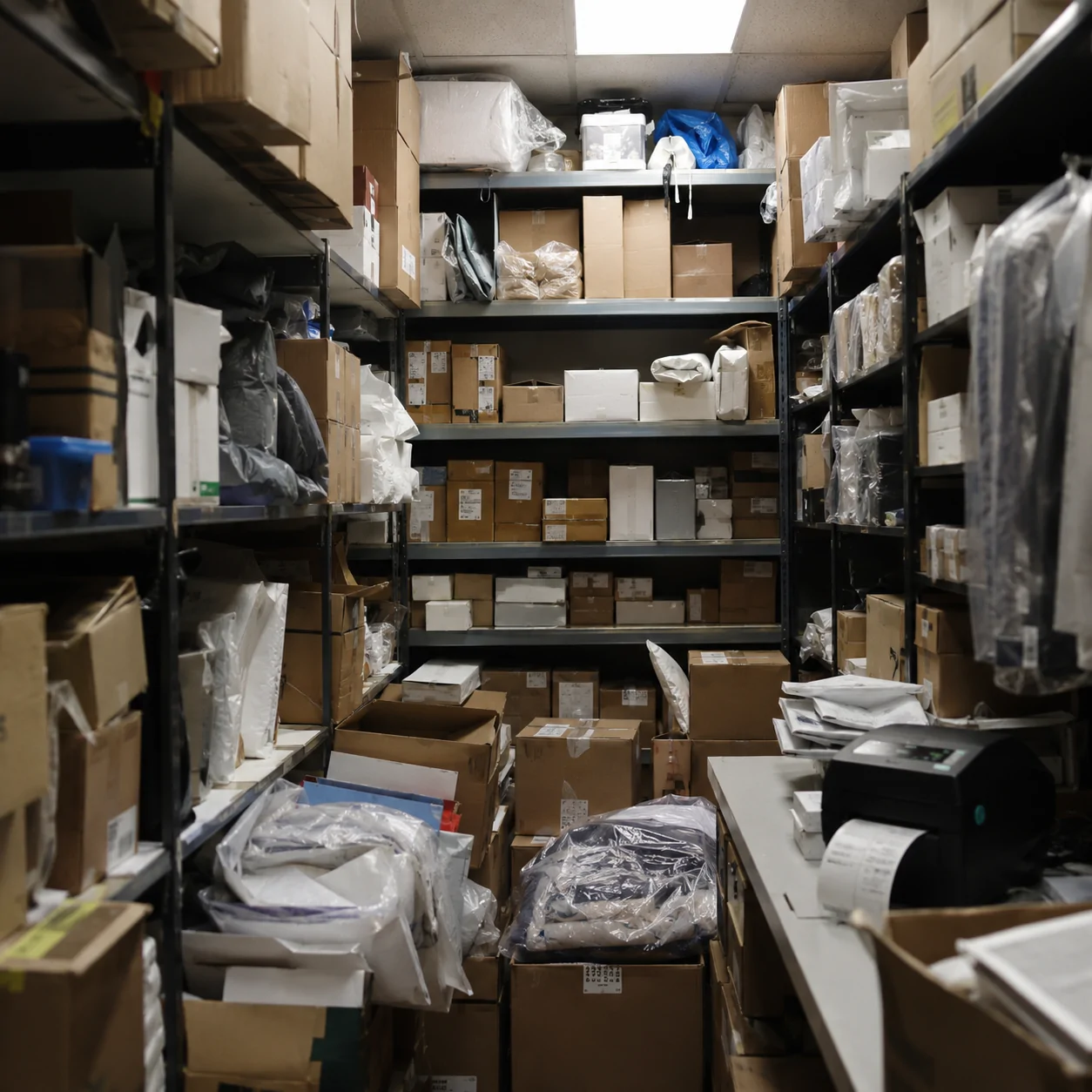
Ship-from-store locations often handle a wide variety of products, yet have limited backroom space and relatively few dedicated packing resources.
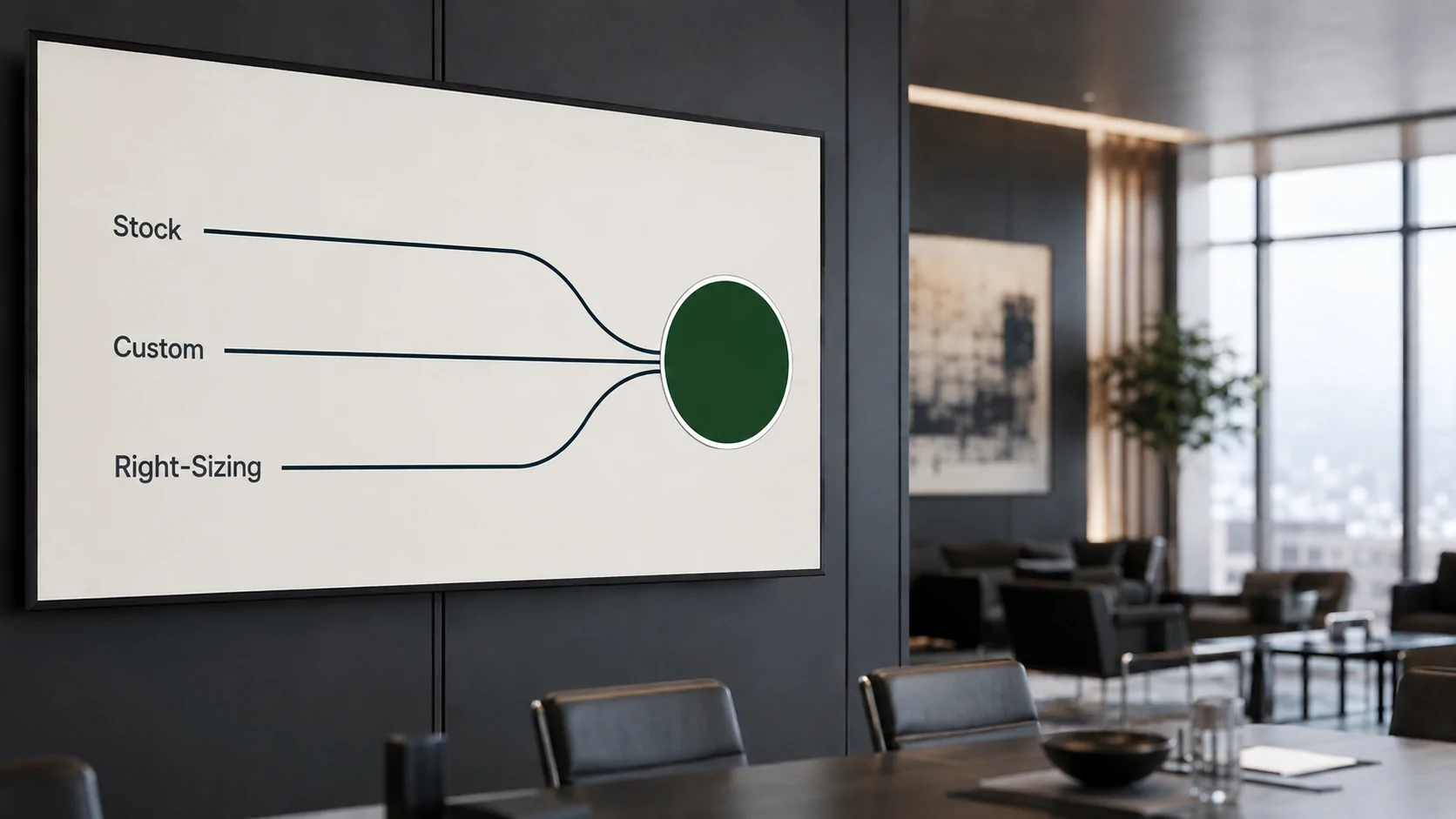
Retailers generally face several choices:
- Stock more fixed-height boxes. This provides more sizing options but increases inventory, storage, and replenishment complexity.
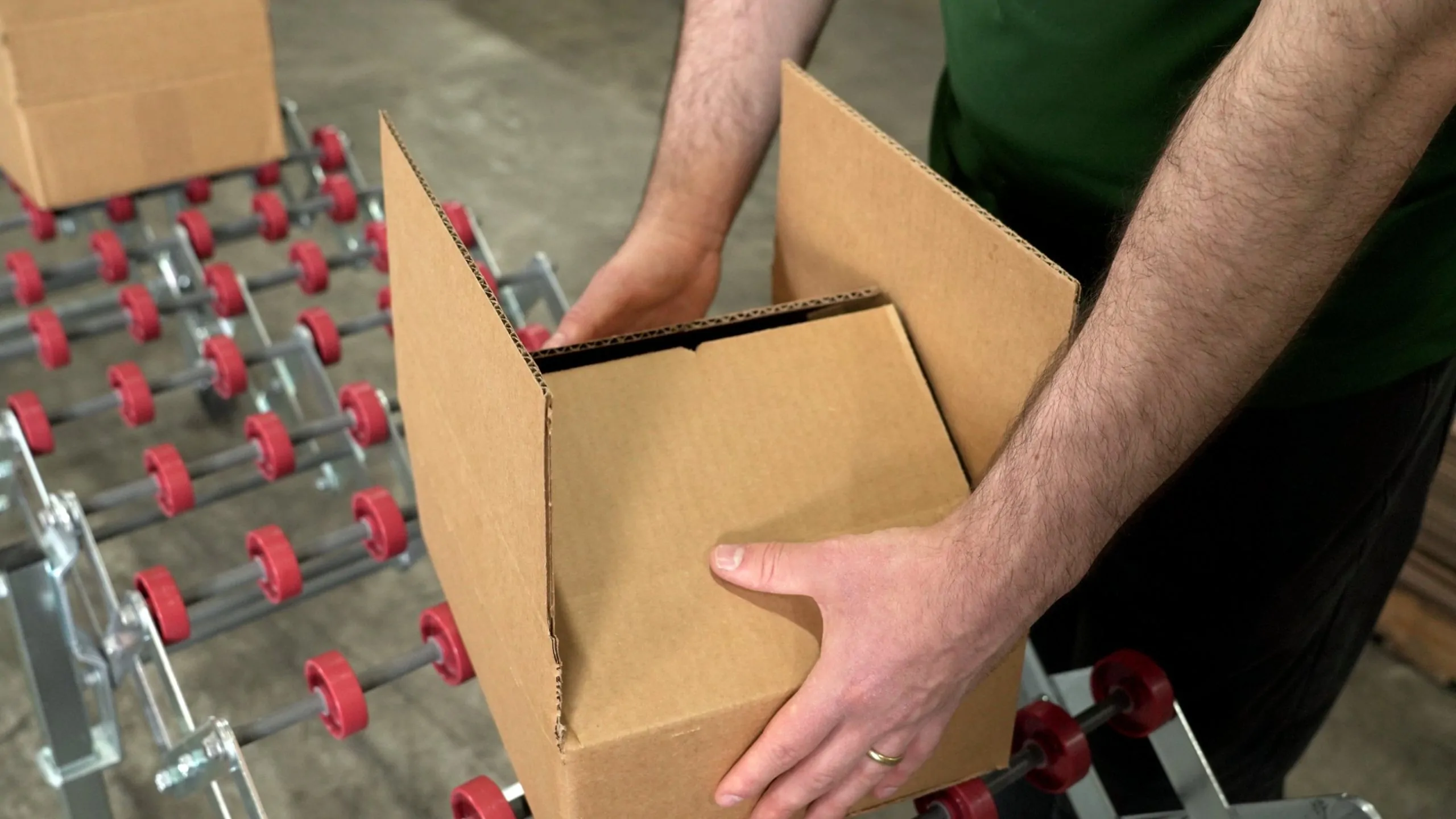
- Use conventional multi-depth cartons. These can accommodate multiple heights but typically require associates to cut the box corners before folding.
- Invest in automated box-sizing equipment. This may work well in certain high-volume fulfillment centers but can be difficult to justify across hundreds of individual stores.
For retailers, the ideal solution would reduce excess carton height without adding cutting steps, machinery, or meaningful complexity to the packing process.
Adjustable-Height Boxes Without Cutting or Machinery
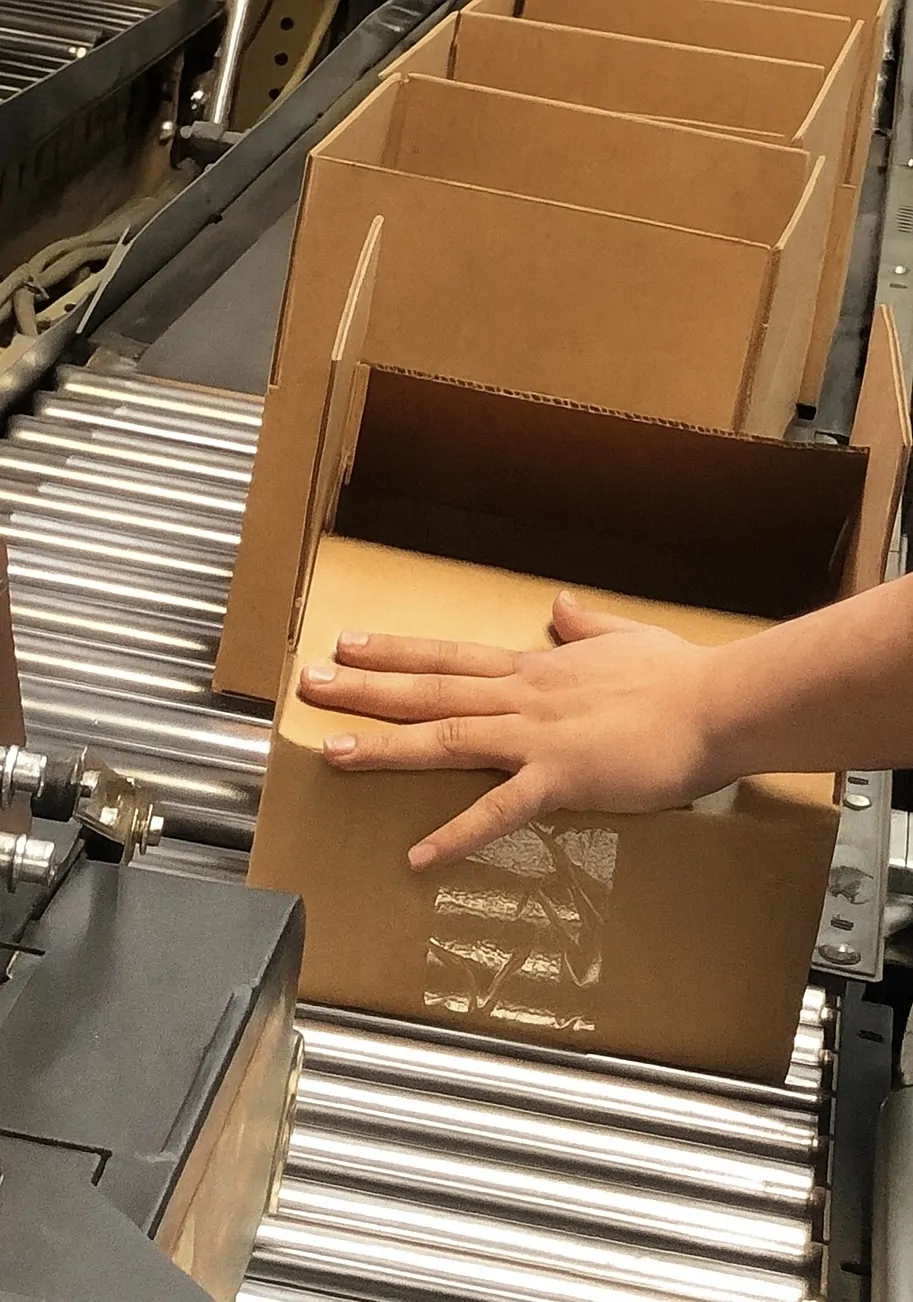
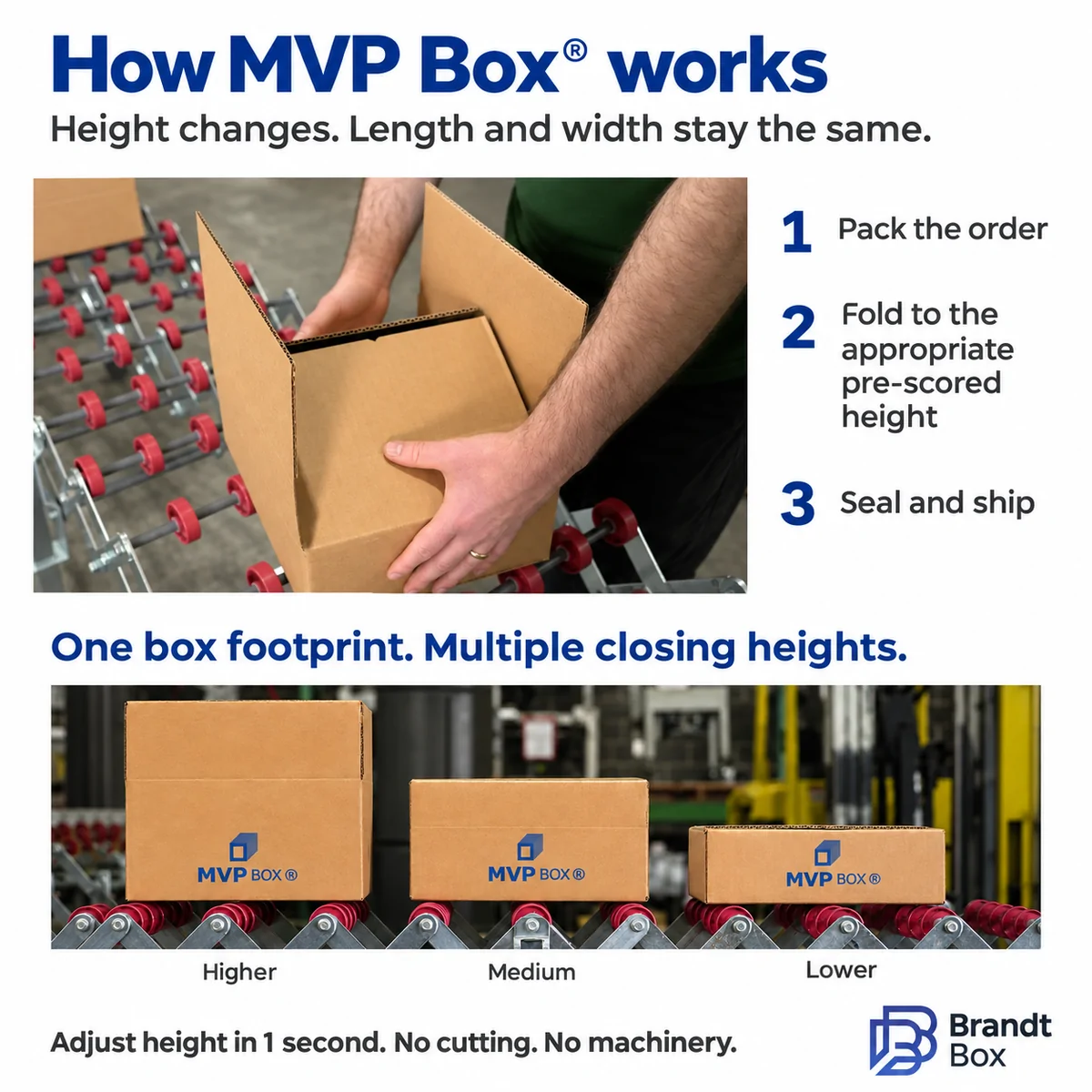
One alternative is MVP Box®, a patented adjustable-height corrugated shipping box from Brandt Box & Paper.
MVP Box uses custom pre-scored fold lines that let associates reduce carton height in 1 second.
No cutting. No machinery. No capital investment.
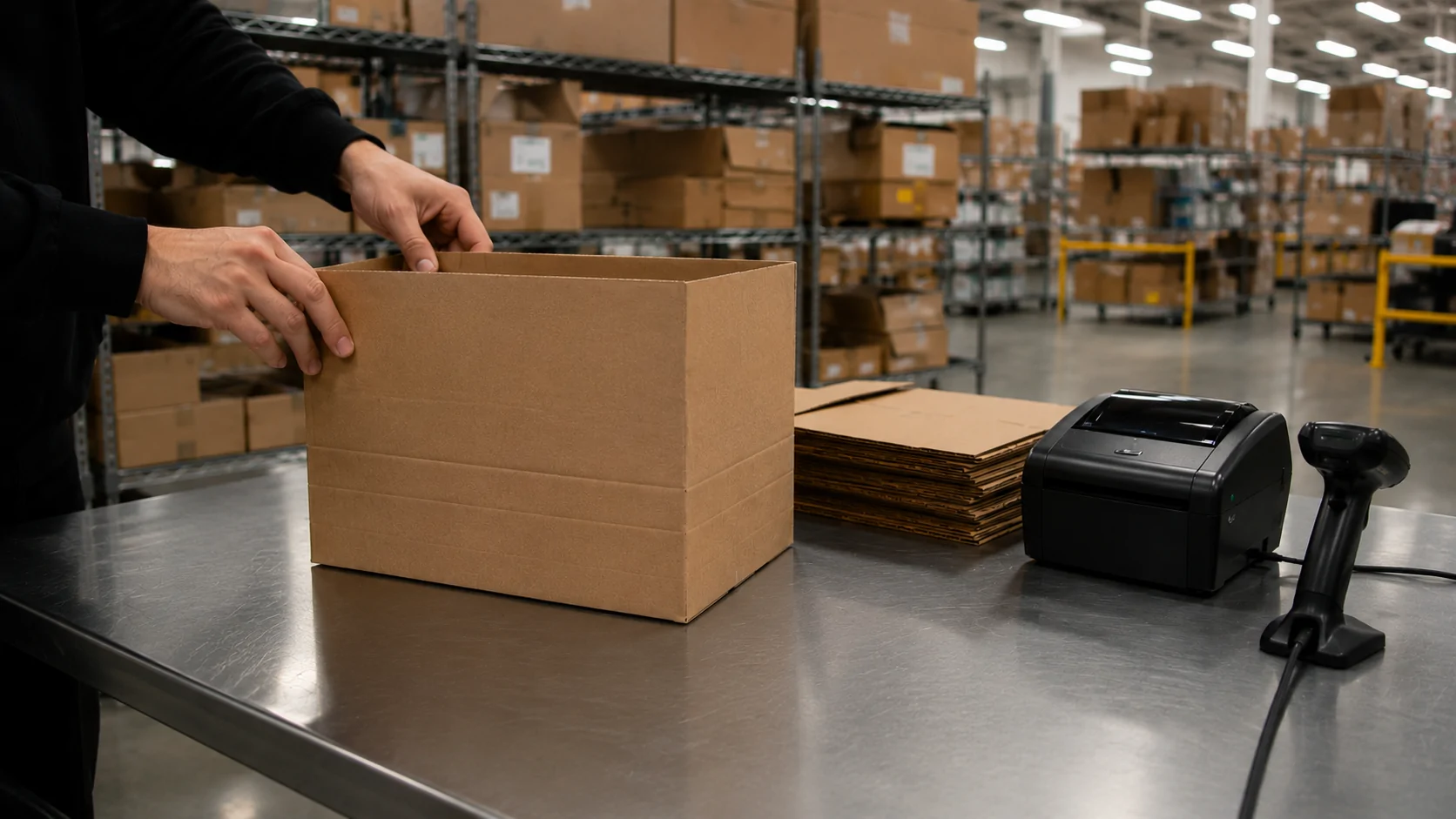
The associate places the product inside the carton, folds the box down to the appropriate pre-scored height, and seals it using the existing packing process.
Unlike automated equipment, MVP Box doesn’t require installation or dedicated floor space. It works at manual packing stations and with compatible existing case-sealing equipment.
Because the carton can close at multiple predetermined heights, it can also replace multiple compatible fixed-height box sizes.
MVP Box adjusts height, not length or width. The greatest SKU-consolidation opportunities generally involve cartons with compatible footprints and different heights.
For ship-from-store operations, this can mean fewer carton SKUs to stock and replenish, less void fill, and reduced dimensional-weight exposure without adding equipment to store backrooms.
How Retailers Can Identify Their Savings Opportunity
Before changing packaging, retailers should examine their existing shipment data to determine where excess box height is affecting costs.
A practical analysis starts with four questions:
- Which box sizes are used most frequently? Identify high-volume cartons across fulfillment centers and store locations.
- How much unused height is present? Compare the final packed dimensions with the product and protective packaging requirements.
- How often does dimensional weight exceed actual weight? These shipments may offer the greatest opportunity for freight savings.
- Which carton sizes could be consolidated? Look for boxes with compatible lengths and widths but different heights that could be covered by one adjustable-height design.
The next step is to compare the current packaging against suitable adjustable-height alternatives.
A useful pilot measures actual freight charges on comparable shipments, box costs, void-fill consumption, packing time, damage rates, and associate adoption.
This matters because the objective isn’t simply to lower dimensional weight. It’s to reduce total packaging and shipping costs without slowing fulfillment.
Preparing for the 2027 Rate Increases
Carrier rate increases are largely outside a retailer’s control. The dimensions of the packages being shipped are not.
For retailers shipping lightweight or variable-height merchandise, reducing unnecessary carton height is one practical way to offset some of the additional transportation expense.
The opportunity can be especially attractive in ship-from-store operations, where packaging simplicity matters as much as freight savings.
And unlike a major automation project, evaluating adjustable-height cartons doesn’t require a capital equipment purchase or changes to the entire fulfillment operation.
Find Out What Your Current Boxes Could Be Costing You
Brandt Box & Paper can review your existing shipping-box sizes, shipment volumes, and packing requirements to identify where MVP Box could reduce dimensional weight, void fill, and box SKUs.
We can also provide MVP Box samples in suitable sizes so your team can evaluate the height adjustment in your existing packing process.
Request an MVP Box Savings Analysis or Samples
Better Packaging, Better Pricing®